
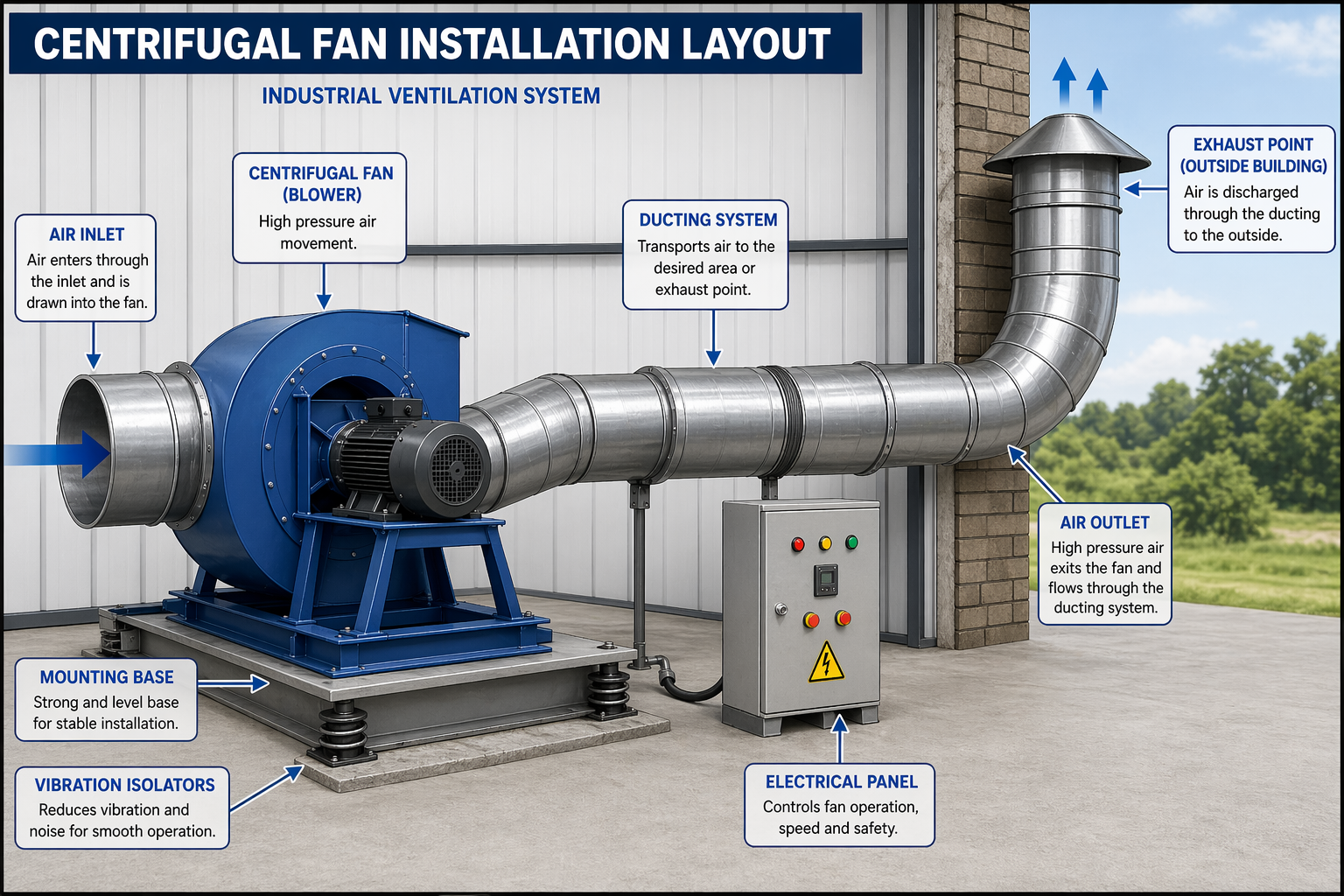
Proper ventilation is critical in factories, warehouses, and commercial spaces to maintain air quality, control temperature, and ensure worker safety. One of the most effective solutions is the centrifugal fan (blower), https://thecoldroomkahuna.com/product/centrifugal-fan-kenya/ known for its ability to move large volumes of air at high pressure.
In this guide, we walk you through the step-by-step process of centrifugal fan installation in Kenya, helping you achieve efficient and long-lasting industrial ventilation.
What is a Centrifugal Fan?
A centrifugal fan is a mechanical device that uses rotating impellers to increase air pressure and move air through ducts or ventilation systems.
Key Benefits:
- High air pressure for ducted systems
- Suitable for industrial and commercial ventilation
- Handles heat, dust, and fumes effectively
- Durable for continuous operation
Applications in Kenya
Centrifugal fans are widely used in:
- Factories – removing heat, fumes, and dust
- Warehouses – improving airflow and temperature control
- Commercial buildings – ventilation for kitchens, basements, and HVAC systems
- Agricultural setups – drying and air circulation
Tools & Equipment Required
Before installation, ensure you have:
- Mounting brackets or base frame
- Ducting (GI or flexible ducts)
- Fasteners (bolts, nuts, anchors)
- Electrical wiring & control panel
- Vibration isolators
- Safety gear (gloves, helmet)
Step-by-Step Centrifugal Fan Installation
Step 1: Site Assessment & Planning
- Evaluate airflow requirements (CFM)
- Identify installation location (roof, wall, or floor-mounted)
- Plan duct routing and outlet direction
👉 Tip: Poor planning leads to airflow loss and inefficiency.
Step 2: Prepare the Mounting Base
- Install a solid and level base frame
- Use anti-vibration pads to reduce noise and wear
- Ensure the structure can support the fan weight
Step 3: Position the Centrifugal Fan
- Place the fan correctly according to airflow direction
- Align inlet and outlet with ducting system
- Secure firmly using bolts and anchors
Step 4: Install Ductwork
- Connect ducts to fan inlet and outlet
- Seal all joints to prevent air leakage
- Use proper duct sizing to maintain airflow efficiency
Step 5: Electrical Connections
- Connect to a suitable power supply (single or three-phase)
- Install control panel or starter
- Ensure proper grounding and protection
⚠️ Always use a qualified technician for electrical work.
Step 6: Test Run & Inspection
- Run the fan and check for:
- Noise and vibration
- Airflow direction and volume
- Electrical stability
- Adjust alignment if necessary
Step 7: Final Optimization
- Balance airflow within the system
- Install dampers if needed
- Train operators on usage and maintenance
Common Installation Mistakes to Avoid
- Incorrect fan sizing
- Poor duct design
- Lack of vibration control
- Improper electrical connections
- Ignoring airflow direction
Maintenance Tips for Long-Term Performance
- Regularly clean fan blades and ducts
- Check bearings and lubrication
- Inspect electrical connections
- Monitor noise and vibration
Why Professional Installation Matters in Kenya
Industrial environments in Kenya often face:
- High temperatures
- Dust-heavy conditions
- Continuous operation demands
Professional installation ensures:
- Maximum efficiency
- Longer equipment lifespan
- Compliance with safety standards
Conclusion
Installing a centrifugal fan correctly is essential for achieving efficient ventilation in factories, warehouses, and commercial setups. By following this step-by-step guide, businesses can improve air quality, reduce heat buildup, and enhance productivity.