

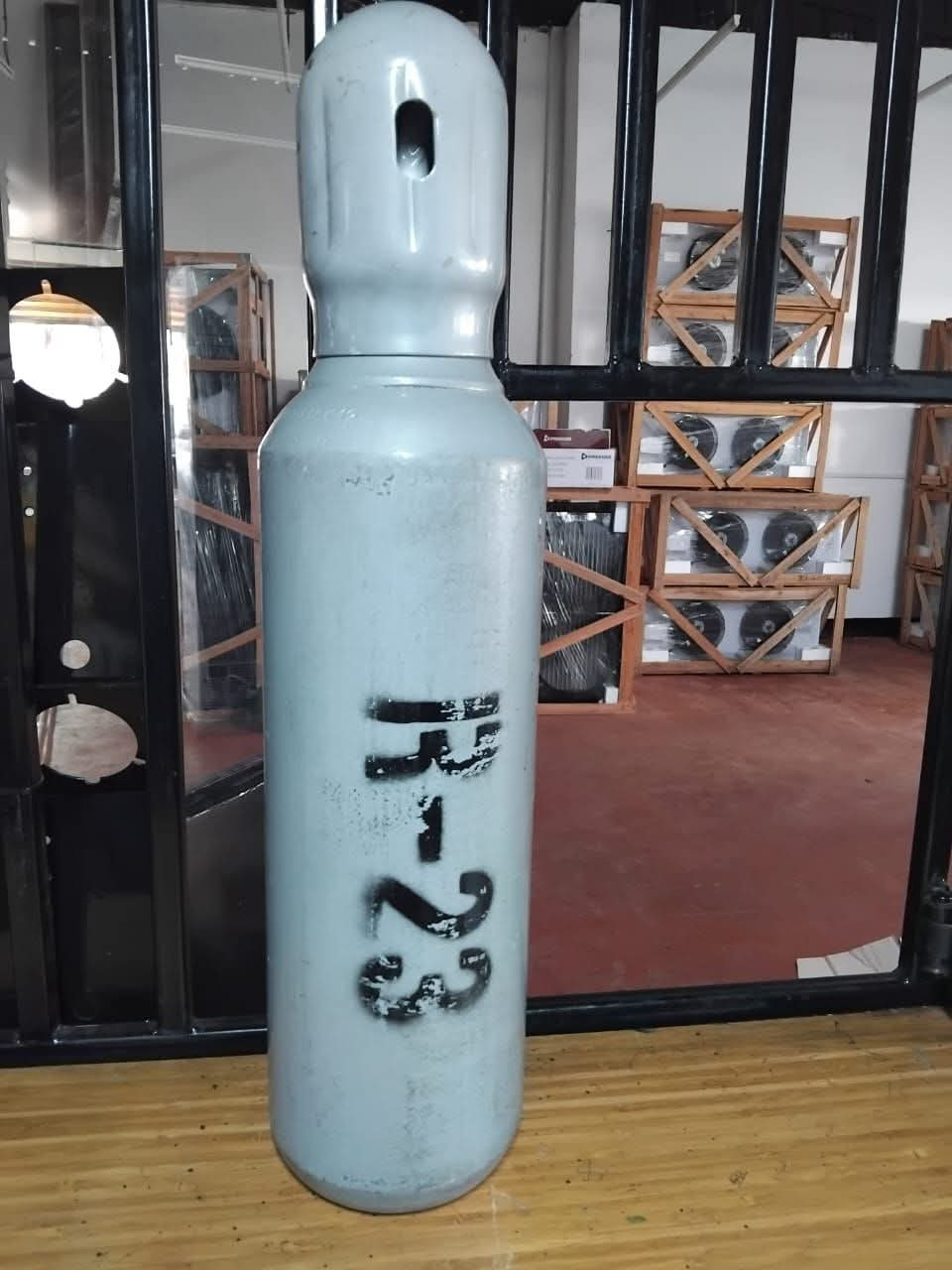
Difference Between R-23 and R-508B Refrigerant: Applications, Performance and Compatibility
R-23 and R-508B are specialised refrigerants used in ultra-low-temperature refrigeration systems. They are designed for applications that require temperatures far below those typically achieved by conventional cold rooms and standard commercial refrigeration equipment.
Although both refrigerants are used in demanding low-temperature applications, they differ in chemical composition, operating characteristics and system performance. Understanding these differences helps refrigeration technicians, engineers and equipment buyers identify the appropriate refrigerant for a particular installation.
The Cold Room Kahuna provides refrigeration equipment, spare parts and technical support for customers in Kenya and East Africa. This guide explains the main differences between R-23 and R-508B, their applications, compatibility considerations and important handling requirements.
What Is R-23 Refrigerant?
R-23, also known as trifluoromethane, is a single-component hydrofluorocarbon (HFC) refrigerant with the chemical formula CHF₃.
It has a normal boiling point of approximately -82.1°C at atmospheric pressure, making it suitable for specialised refrigeration systems designed to achieve ultra-low temperatures.
Applications of R-23
R-23 has been used in applications such as:
- Ultra-low-temperature laboratory freezers
- Scientific and research equipment
- Specialised medical and pharmaceutical storage equipment
- The low-temperature stages of certain cascade refrigeration systems
- Other specialised systems designed for R-23
The actual application depends on the refrigeration system’s design, compressor specifications and required evaporating temperature.
Key Characteristics of R-23
R-23 is a single-component refrigerant, which means it does not contain the multiple refrigerant components found in blends such as R-508B.
However, R-23 has a very high global warming potential (GWP). Its use, availability and long-term suitability should therefore be assessed against current environmental regulations and the requirements of the particular application.
What Is R-508B Refrigerant?
R-508B is a specialised refrigerant blend consisting of two HFC components: R-23 and R-116.
Its standard composition by mass is approximately:
- R-23: 46%
- R-116: 54%
R-508B is used in ultra-low-temperature refrigeration, particularly in the low-temperature circuit of suitable cascade refrigeration systems.
Applications of R-508B
R-508B is used in applications such as:
- Ultra-low-temperature refrigeration systems
- Specialised laboratory and scientific equipment
- Certain pharmaceutical and medical storage systems
- Low-temperature stages of cascade refrigeration plants
- Specialised industrial refrigeration equipment designed for R-508B
R-508B is particularly useful in suitable systems requiring very low evaporating temperatures and specific pressure-temperature characteristics.
Key Characteristics of R-508B
R-508B is an azeotropic blend, meaning it behaves approximately like a single refrigerant during phase change under equilibrium conditions.
Compared with R-23, R-508B can offer higher refrigeration capacity and lower compressor discharge temperatures under certain operating conditions. Actual results depend on the compressor, evaporating temperature, condensing conditions and system design.
R-508B is classified as A1 under ASHRAE Standard 34, indicating lower toxicity and no flame propagation under the classification’s prescribed test conditions. Safe handling is still essential.
R-23 vs R-508B: Key Differences
The following table summarises the main differences between the two refrigerants.
| Feature | R-23 | R-508B |
|---|---|---|
| Refrigerant type | Single-component HFC | Azeotropic HFC blend |
| Composition | Trifluoromethane, CHF₃ | 46% R-23 and 54% R-116 by mass |
| Normal boiling point | Approximately -82.1°C | Approximately -87.6°C |
| Typical application | Specialised ultra-low-temperature refrigeration | Ultra-low-temperature refrigeration, particularly suitable cascade systems |
| Refrigeration performance | Depends on system design and operating conditions | Can offer higher capacity than R-23 under comparable specified conditions |
| Compressor discharge temperature | Can be relatively high in demanding applications | Generally lower than R-23 in comparable applications documented by ASHRAE |
| Flammability classification | A1 | A1 |
| Ozone depletion potential | Zero | Zero |
| Global warming potential | Very high | Very high |
| Interchangeability | Must match the equipment design | Must match the equipment design |
Sources for refrigerant composition, boiling points and comparative operating characteristics: ASHRAE Handbook—Refrigeration and recognised refrigerant reference data.
Which Refrigerant Provides Better Ultra-Low-Temperature Performance?
Neither refrigerant is automatically the best choice for every ultra-low-temperature system.
R-23 has established applications in specialised low-temperature refrigeration. R-508B was developed for very low-temperature applications and can provide advantages in refrigeration capacity and compressor discharge temperature under suitable operating conditions.
For example, lower compressor discharge temperatures may help improve lubricant stability and reduce thermal stress on compressor components. However, actual compressor life and energy consumption depend on the complete system design and operating conditions.
When comparing R-23 and R-508B, engineers should evaluate:
- Required evaporating and condensing temperatures
- Refrigeration capacity at the intended operating point
- Compressor operating limits
- Discharge temperature
- Lubricant compatibility and oil return
- Energy consumption
- Availability of approved refrigerant and equipment support
A manufacturer’s performance data should guide the final selection rather than a general claim that one refrigerant is always more efficient.
Can R-23 and R-508B Be Used Interchangeably?
No. R-23 and R-508B should not be treated as direct substitutes without checking the refrigeration equipment manufacturer’s instructions.
Although both refrigerants serve ultra-low-temperature applications, they have different pressure-temperature characteristics and may produce different operating conditions.
Changing refrigerants can affect refrigeration capacity, compressor discharge temperature, pressure ratios, oil circulation and system performance.
Before converting an existing system, a qualified refrigeration technician should confirm:
- Whether the compressor is approved for the proposed refrigerant.
- Whether the evaporator, condenser, valves and other components are suitable.
- Whether the existing lubricant is compatible with the refrigerant and operating temperatures.
- Whether the system requires changes to the refrigerant charge or controls.
- Whether the conversion complies with applicable safety and environmental requirements.
Never mix R-23 and R-508B or perform a refrigerant conversion based solely on their similar applications.
Understanding R-23 and R-508B in Cascade Refrigeration Systems
Cascade refrigeration systems use two or more separate refrigeration circuits connected through a cascade heat exchanger.
The higher-temperature circuit removes heat from the lower-temperature circuit, allowing the low-temperature stage to operate under conditions suitable for ultra-low-temperature refrigeration.
R-23 and R-508B have both been used in suitable low-temperature stages. R-508B can offer favourable operating characteristics, including lower discharge temperatures compared with R-23 under documented comparable conditions.
Correct cascade system design requires careful selection of compressors, heat exchangers, refrigerants, lubricants and pressure-rated components.
For demanding applications, the engineer must also account for suction superheat, liquid subcooling, oil return and the required operating temperature.
Environmental Impact of R-23 and R-508B
Both R-23 and R-508B have zero ozone depletion potential but very high global warming potential.
This distinction is important: zero ozone depletion potential does not mean that a refrigerant has a low climate impact.
R-23 has a particularly high GWP, while R-508B also has a very high GWP because both of its components are potent greenhouse gases. Neither should be described as an environmentally friendly refrigerant.
Where either refrigerant is used, good refrigeration practice includes:
- Preventing refrigerant leaks
- Recovering refrigerant rather than intentionally venting it
- Maintaining equipment to reduce refrigerant losses
- Using approved recovery and handling equipment
- Checking applicable refrigerant import, handling and environmental requirements
- Evaluating technically suitable lower-impact alternatives when designing new systems
The best replacement strategy depends on the required temperature, equipment compatibility, available technology and applicable regulations.
Safety and Handling Requirements
R-23 and R-508B should be handled by trained refrigeration professionals using equipment and procedures suitable for the refrigerant and system pressure.
Important precautions include:
- Follow the refrigerant supplier’s safety data sheet.
- Use appropriate personal protective equipment.
- Provide adequate ventilation in areas where refrigerants may be released.
- Avoid contact with escaping liquid refrigerant, which can cause cold burns or frostbite.
- Prevent refrigerant accumulation in confined or poorly ventilated spaces.
- Use compatible recovery cylinders and equipment.
- Never heat refrigerant cylinders directly or expose them to excessive temperatures.
- Verify system pressure ratings and manufacturer requirements before servicing.
Although both refrigerants have an A1 safety classification, refrigerant releases can displace oxygen, and decomposition products may form when refrigerants are exposed to sufficiently high temperatures or flames.
Which Refrigerant Should You Choose?
The correct refrigerant depends on the existing equipment or the design requirements of a new ultra-low-temperature refrigeration system.
Consider R-23 when the equipment is specifically designed or approved for R-23 and the required refrigeration performance can be achieved within the compressor’s operating limits.
Consider R-508B when the equipment is designed or approved for R-508B and its operating characteristics are appropriate for the required temperature and refrigeration capacity.
For either option, confirm refrigerant availability, equipment compatibility, lubricant requirements, operating pressures and environmental obligations before purchasing.
R-23 and R-508B Refrigerant Supply in Kenya
The Cold Room Kahuna supports refrigeration equipment and spare-parts requirements for customers in Kenya and East Africa.
When sourcing a specialised refrigerant, provide the refrigerant designation, equipment model, intended application and required quantity. If you are servicing an existing ultra-low-temperature system, the compressor nameplate and manufacturer’s refrigerant specifications will help establish the correct requirement.
For refrigeration equipment, spare parts and technical enquiries, visit The Cold Room Kahuna or contact us through our contact page.
Refrigerant availability and supply arrangements should be confirmed before ordering.
Frequently Asked Questions
What is the main difference between R-23 and R-508B?
R-23 is a single-component HFC refrigerant, while R-508B is a blend containing 46% R-23 and 54% R-116 by mass. Both are used in specialised ultra-low-temperature refrigeration, but their operating characteristics differ.
Which refrigerant has the lower boiling point?
R-508B has a lower normal boiling point, approximately -87.6°C, compared with approximately -82.1°C for R-23. Boiling point alone does not determine which refrigerant will provide better performance in a particular system.
Is R-508B more efficient than R-23?
R-508B can provide favourable refrigeration capacity and lower compressor discharge temperatures under comparable specified operating conditions. Actual efficiency depends on the equipment, temperatures and complete refrigeration system.
Can R-508B replace R-23 in an existing system?
Not automatically. Confirm compatibility with the compressor, lubricant, valves, controls and other components, and follow the equipment manufacturer’s approved conversion procedures.
Are R-23 and R-508B environmentally friendly?
No. Both have zero ozone depletion potential but very high global warming potential. Preventing leaks, recovering refrigerant and complying with applicable environmental requirements are important.
Where are R-23 and R-508B used?
They are used in specialised ultra-low-temperature refrigeration, including certain laboratory, scientific, medical and industrial applications. The precise application depends on the equipment design.
Conclusion
R-23 and R-508B are important refrigerants for specialised ultra-low-temperature refrigeration systems. R-23 is a single-component refrigerant, while R-508B combines R-23 and R-116 to provide different operating characteristics.
The best choice depends on the required temperature, refrigeration capacity, compressor limitations, lubricant compatibility and environmental considerations.
For refrigeration equipment and technical enquiries in Kenya and East Africa, contact The Cold Room Kahuna with your application details and equipment specifications.