

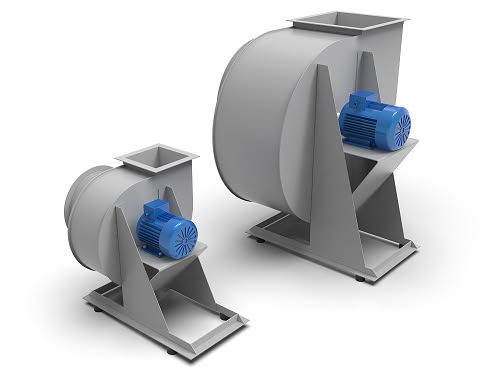
High Air Volume vs High Pressure Centrifugal Blowers in Kenya: Which Is Right for Your Application?
Choosing between a high air volume centrifugal blower and a high pressure centrifugal blower is essential when planning an industrial ventilation, air extraction or process air system. Although both use a rotating impeller to move air, they are designed to meet different airflow and pressure requirements.
A high air volume blower is generally suitable for moving large quantities of air for ventilation and cooling. A high pressure blower is designed to overcome greater resistance in systems such as dust collection, industrial filtration and certain material-handling processes.
At The Cold Room Kahuna, we supply industrial centrifugal fans and blowers for a range of applications across Kenya and East Africa. This guide explains the differences between the two types, their typical applications and the key specifications to consider before purchasing.
What Is a Centrifugal Blower?
A centrifugal blower draws air into the centre of a rotating impeller and directs it outward through the fan housing. This design allows the blower to generate the pressure needed to move air through ductwork and other system components.
Centrifugal blowers are commonly used in:
- Factory and warehouse ventilation
- Industrial air extraction
- Dust collection and filtration
- Drying and process air systems
- Agricultural and food-processing facilities
- Commercial kitchen ventilation
- Industrial equipment requiring a controlled air supply
The correct blower depends on the volume of air required, the resistance of the system and the operating conditions.
Understanding Air Volume and Static Pressure
Two of the most important measurements when selecting an industrial blower are airflow and static pressure.
1. Air Volume: How Much Air Can the Blower Move?
Air volume describes the quantity of air a blower moves over a given period. It is commonly measured in cubic metres per hour (m³/h).
A blower with a high airflow capacity is useful when an application requires large quantities of air to be circulated, supplied or extracted.
Typical applications include factory ventilation, warehouse air movement, agricultural ventilation and other systems that need substantial airflow.
However, the stated airflow should always be considered alongside the pressure at which the blower must operate. The airflow delivered in an installed system can be lower than the free-air rating.
2. Static Pressure: How Much Resistance Can the Blower Overcome?
Static pressure indicates the pressure available to overcome resistance in an air system. It is commonly measured in pascals (Pa).
Resistance can come from:
- Long or narrow ductwork
- Multiple duct bends
- Air filters and bag filters
- Cyclone separators
- Dust collection equipment
- Dampers, grilles and other components
- Industrial processing equipment
A high pressure centrifugal blower is useful where the system creates substantial resistance and sufficient pressure must be maintained to deliver the required airflow.
The key difference: airflow tells you how much air moves, while static pressure indicates how effectively the blower can overcome system resistance.
High Air Volume Centrifugal Blowers
What Are They Designed For?
High air volume centrifugal blowers prioritise moving relatively large quantities of air at their intended operating pressure. They are suitable for ventilation, air supply, extraction and selected cooling or drying applications.
For example, the high-air-volume model referenced in this guide has the following specifications.
Typical Model Specifications
| Specification | Details |
|---|---|
| Blower type | Centrifugal blower |
| Motor power | 2.2 kW |
| Rotational speed | 1,450 RPM |
| Airflow | Approximately 4,500–6,200 m³/h |
| Static pressure | Approximately 690–930 Pa |
These figures relate to the referenced model and its specified performance range. Actual operating performance depends on the system resistance and the manufacturer’s fan performance data.
Common Applications
High air volume centrifugal blowers may be suitable for:
- Factory and warehouse ventilation
- Air circulation in industrial buildings
- Poultry and agricultural facilities
- Greenhouse ventilation systems
- Food-processing facilities
- Drying applications
- Air supply and extraction systems
- Selected ducted ventilation installations
When Should You Choose a High Air Volume Blower?
Consider this type when the primary requirement is moving a substantial volume of air and the system does not impose the very high resistance associated with demanding industrial processes.
Before choosing, establish the required airflow, duct dimensions, operating pressure and available electrical supply.
High Pressure Centrifugal Blowers
What Are They Designed For?
High pressure centrifugal blowers are designed to generate higher pressure for systems with significant airflow resistance. They are particularly useful in applications where air must pass through restrictive ductwork, filtration equipment or industrial processing systems.
The high-pressure model referenced in this comparison has the following specifications.
Typical Model Specifications
| Specification | Details |
|---|---|
| Blower type | High pressure centrifugal blower |
| Motor power | 7.5 kW |
| Rotational speed | 2,900 RPM |
| Airflow | Approximately 3,130–3,685 m³/h |
| Static pressure | Approximately 4,776–4,910 Pa |
These are model-specific figures, not standard specifications for all high pressure blowers. Confirm the manufacturer’s performance curve and operating point before ordering.
Common Applications
High pressure centrifugal blowers may be suitable for:
- Industrial dust collection systems
- Bag filters and certain filtration systems
- Cyclone separators
- Industrial drying and process air
- Combustion air supply where correctly specified
- Certain pneumatic conveying systems
- Industrial equipment requiring pressurised airflow
For dusty, abrasive, hot or corrosive air, the impeller, housing, seals and motor arrangement must be suitable for the operating conditions. Pneumatic conveying also requires a blower specifically selected for the material, conveying distance and system design.
When Should You Choose a High Pressure Blower?
Choose this type when the application requires substantially more pressure to overcome system resistance.
Do not select a high pressure blower simply because its motor is larger. The required airflow at the actual operating pressure is the deciding factor.
High Air Volume vs High Pressure Centrifugal Blowers: Comparison
| Feature | High Air Volume Blower | High Pressure Blower |
|---|---|---|
| Primary purpose | Moving larger quantities of air | Overcoming higher system resistance |
| Typical airflow in the models discussed | 4,500–6,200 m³/h | 3,130–3,685 m³/h |
| Typical static pressure in the models discussed | 690–930 Pa | 4,776–4,910 Pa |
| Motor power in the models discussed | 2.2 kW | 7.5 kW |
| Rotational speed in the models discussed | 1,450 RPM | 2,900 RPM |
| Typical applications | Ventilation, air supply and selected drying applications | Dust collection, filtration and selected industrial processes |
| Main selection priority | Required airflow at operating pressure | Required pressure and airflow at the operating point |
The figures above compare the two referenced models only. Different models can have overlapping performance ranges, so use the manufacturer’s fan curve to make the final selection.
Which Centrifugal Blower Is Best for Your Industry?
Factories and Warehouses
For general ventilation, moving air through suitable ventilation openings or supplying air to a building, a high air volume blower may be appropriate.
Where air must pass through extensive ductwork, filters or extraction equipment, a higher pressure model may be necessary.
Poultry Houses and Agricultural Buildings
The correct blower depends on the ventilation layout, building size, required air changes, heat load and resistance from the ductwork.
High airflow is important in many ventilation systems, but the blower must still deliver the required air volume under actual operating conditions.
Dust Collection and Industrial Filtration
Dust collection systems often require higher static pressure to overcome the resistance of ductwork, hoods, filters and separators.
A properly selected high pressure centrifugal blower may be appropriate. The fan must also be suitable for the type and concentration of dust being handled.
Drying and Food Processing
Industrial drying processes vary considerably. Some need large quantities of moving air, while others require higher pressure to distribute air through equipment or restrictive passages.
Choose the blower according to the drying system’s airflow, pressure, temperature and process requirements.
Workshops and Manufacturing Plants
Workshops may require general ventilation, local exhaust extraction or air supply to production equipment. A high air volume blower may suit general airflow, while a high pressure blower may be more appropriate for a system with substantial resistance.
For fumes, smoke or hazardous contaminants, ensure that the complete extraction system is correctly designed for the material being handled.
How to Select the Right Industrial Centrifugal Blower
Before purchasing a centrifugal blower in Kenya, consider these six factors.
1. Required Airflow
Establish the required airflow in m³/h or another suitable unit. For an existing system, use the design requirements or measured operating conditions.
2. Required Static Pressure
Account for pressure losses across ducts, bends, filters, dampers and connected equipment. The blower must deliver the required airflow at the calculated system resistance.
3. Motor Power and Speed
Confirm the motor power, rotational speed and suitability for the intended duty. A higher motor rating alone does not guarantee better airflow or pressure.
4. Electrical Supply
Check the available voltage, single-phase or three-phase supply, frequency and motor requirements before ordering.
5. Air and Operating Conditions
Specify whether the blower will handle clean air, hot air, dust, fumes, moisture or process air. These conditions can affect material selection, construction and safety requirements.
6. Installation and Ductwork
Consider the blower’s mounting arrangement, inlet and outlet dimensions, duct layout, access for maintenance and available installation space.
A correctly sized blower and well-designed duct system help achieve the required performance without unnecessary energy consumption.
Where to Buy Centrifugal Blowers in Kenya
The Cold Room Kahuna supplies industrial centrifugal fans and blowers for ventilation, extraction and process air applications in Kenya, with supply and installation support for projects across East Africa.
We can assist with selecting suitable equipment for:
- Factory and warehouse ventilation
- Industrial air extraction
- Dust collection and filtration
- Agricultural and poultry ventilation
- Drying and process air systems
- Ducted industrial ventilation
For a quotation, share your intended application, required airflow, operating pressure, duct dimensions, electrical supply and installation location. If you are replacing an existing blower, include its nameplate details and dimensions where possible.
These details help identify an appropriate model for your project.
Explore our industrial centrifugal fan and blower range in Kenya for product information.
For dust collection applications, read our guide to dust collector fans and industrial centrifugal blowers.
Frequently Asked Questions
Is a high air volume blower better than a high pressure blower?
Neither is universally better. A high air volume blower is suited to applications that prioritise airflow, while a high pressure blower is intended for systems with greater resistance. The right choice depends on the required operating point.
Can a high pressure blower be used for ventilation?
Yes, where the ventilation system requires higher pressure. However, a high pressure blower may be unnecessary for a simple, low-resistance ventilation application.
Does a larger motor mean more airflow?
Not necessarily. Airflow depends on the impeller design, rotational speed, pressure requirements and system resistance. Always check the performance curve.
Which blower is suitable for dust collection?
A suitably specified centrifugal blower is commonly used in dust collection systems. Selection depends on the dust characteristics, required airflow, filter resistance and complete system design.
Can centrifugal blowers be used in poultry houses?
Yes. They can be used in suitable agricultural ventilation systems, particularly where ductwork or other components create resistance. The system must be designed around the building’s ventilation requirements.
Do you supply and install industrial blowers in Kenya?
The Cold Room Kahuna supplies industrial centrifugal fans and blowers and provides installation support for suitable projects. Contact us with your application and technical requirements for assistance with selection and quotation.
Conclusion
High air volume and high pressure centrifugal blowers serve different purposes. High air volume models prioritise moving larger quantities of air, while high pressure models are designed to overcome greater resistance in industrial systems.
Selecting the correct blower starts with the required airflow and operating pressure, followed by motor requirements, electrical supply, installation conditions and the type of air being handled.
For centrifugal blower supply and installation in Kenya and East Africa, contact The Cold Room Kahuna to discuss your application and identify a suitable solution.