

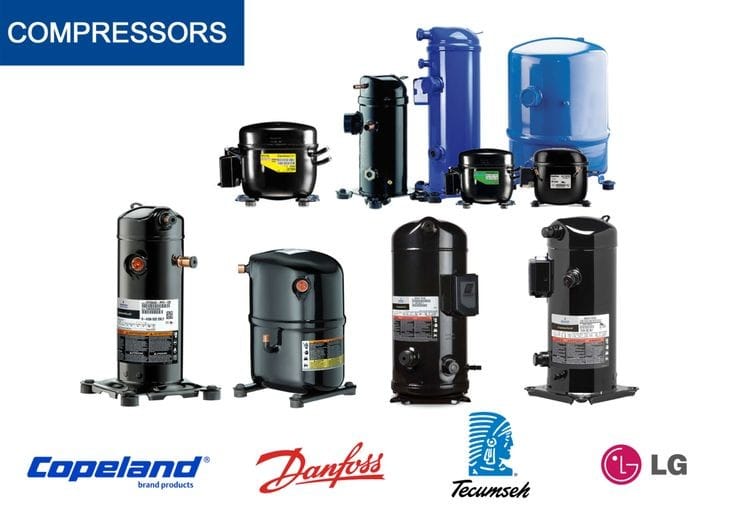
Refrigeration Compressor Price in Kenya: Types, Costs & Buying Guide
Looking for the refrigeration compressor price in Kenya? The cost of a refrigeration compressor depends on several factors, including compressor type, brand, horsepower, cooling capacity, refrigerant, operating temperature, application and whether the compressor is new or refurbished.
At The Cold Room Kahuna, we supply refrigeration compressors and refrigeration equipment for cold rooms, freezer rooms, supermarkets, hotels, restaurants, food processing facilities, agricultural businesses, pharmaceutical storage and industrial refrigeration applications across Kenya and East Africa.
We supply and support leading refrigeration brands and can help you select a compressor that matches your refrigeration system, cooling requirements and budget.
Refrigeration Compressor Price in Kenya
There is no single price for a refrigeration compressor because different refrigeration systems require different compressor capacities and specifications.
As a general guide, refrigeration compressor prices in Kenya may fall into the following ranges:
| Compressor Type / Application | Indicative Price Range in Kenya |
|---|---|
| Small refrigeration compressors | From approximately KSh 12,000 |
| Medium commercial refrigeration compressors | Approximately KSh 80,000 – KSh 200,000 |
| Larger cold room compressors | Approximately KSh 150,000 – KSh 500,000+ |
| Industrial refrigeration compressors | Approximately KSh 200,000 – KSh 1,000,000+ |
| Refurbished refrigeration units | From approximately KSh 150,000, depending on equipment |
Important: These are indicative price ranges, not fixed quotations. Actual prices vary according to the compressor model, brand, capacity, refrigerant, availability, exchange rates, import costs and application.
For example, our refurbished refrigeration units in Kenya are available at different prices depending on the unit, capacity and condition.
For an accurate price, provide the compressor model, horsepower, refrigerant and refrigeration application when requesting a quotation.
What Is a Refrigeration Compressor?
A refrigeration compressor is the main mechanical component responsible for circulating refrigerant through a refrigeration system.
It draws low-pressure refrigerant vapour from the evaporator and compresses it into a high-pressure, high-temperature gas. The refrigerant then travels to the condenser, where heat is released before the refrigerant continues through the refrigeration cycle.
Compressors are used in:
- Cold rooms
- Walk-in freezers
- Walk-in chillers
- Supermarkets
- Hotels and restaurants
- Food processing plants
- Dairy farms
- Flower farms
- Pharmaceutical cold storage
- Fish and meat storage
- Ice-making systems
- Industrial refrigeration systems
If you are planning a cold room, understanding the different components is important. Read our guide to the components of a cold room setup.
Types of Refrigeration Compressors in Kenya
Different refrigeration applications require different compressor technologies. The most common types include reciprocating, scroll, screw and centrifugal compressors.
1. Reciprocating Refrigeration Compressors
Reciprocating compressors use pistons and cylinders to compress refrigerant. They are widely used in cold rooms and commercial refrigeration systems.
They are available in different capacities and configurations, making them suitable for many small, medium and large refrigeration applications.
Applications
Reciprocating compressors are commonly used for:
- Cold rooms
- Freezer rooms
- Food storage
- Supermarkets
- Restaurants
- Hotels
- Food processing
- Agricultural cold storage
2. Scroll Compressors
Scroll compressors use two spiral-shaped components to compress refrigerant.
They are known for compact construction, relatively quiet operation and efficient performance in suitable applications.
Scroll compressors can be used in refrigeration and air conditioning applications where compact and reliable equipment is required.
3. Screw Compressors
Screw compressors use rotating screws to compress refrigerant and are generally suited to larger refrigeration loads.
They are commonly considered for industrial refrigeration applications requiring continuous operation and high cooling capacity.
Applications include:
- Large cold storage facilities
- Food processing plants
- Industrial warehouses
- Manufacturing facilities
- Large-scale refrigeration systems
4. Centrifugal Compressors
Centrifugal compressors use high-speed rotating impellers to compress refrigerant.
They are primarily designed for large-capacity refrigeration and central cooling applications rather than small cold rooms.
Popular Refrigeration Compressor Brands in Kenya
The right brand depends on the refrigeration application, available capacity, refrigerant and system design.
Some of the major brands used in refrigeration include:
Bitzer Compressors
Bitzer is widely used in commercial and industrial refrigeration applications. Bitzer compressors are available in different configurations and capacities for cold rooms and other refrigeration systems.
Copeland Compressors
Copeland compressors are used across refrigeration and air conditioning applications, with different models designed for different operating conditions.
Tecumseh Compressors
Tecumseh manufactures refrigeration equipment and condensing units suitable for different commercial refrigeration applications.
For example, The Cold Room Kahuna supplies Tecumseh refrigeration and condensing units in Kenya in different capacities, depending on application and availability.
Danfoss Compressors
Danfoss refrigeration components are widely used in commercial refrigeration and cold room systems.
What Determines Refrigeration Compressor Prices in Kenya?
The price of a refrigeration compressor is influenced by several factors.
1. Compressor Capacity
Horsepower alone does not determine whether a compressor is suitable for a particular cold room.
The required refrigeration capacity should be calculated based on factors such as room size, insulation, product load, ambient temperature and required storage temperature.
A larger-capacity compressor will generally cost more than a small compressor.
2. Compressor Type
Different compressor technologies have different manufacturing costs and applications.
A small reciprocating compressor, for example, will normally have a different price from a large industrial screw compressor.
3. Brand
Established refrigeration brands may cost more because of their manufacturing quality, availability of technical specifications, reliability and spare-parts support.
4. Refrigerant
The compressor must be compatible with the refrigerant used in the system.
The refrigerant, operating pressure and temperature range should therefore be considered before purchasing a replacement compressor.
5. Operating Temperature
A compressor for a chilled cold room may have different requirements from one used for a low-temperature freezer or blast freezer.
For example:
- Chiller applications may operate around 0°C to 8°C.
- Freezer applications may require temperatures around -18°C.
- Blast freezing applications may require temperatures significantly below -18°C.
The compressor must be selected according to the actual evaporating and condensing conditions.
6. New vs Refurbished
New compressors generally have a higher purchase price.
A professionally refurbished refrigeration unit can provide a more affordable option for businesses with budget constraints, provided the equipment has been properly inspected and tested.
The Cold Room Kahuna also supplies refurbished refrigeration equipment in Kenya.
7. Import and Availability Costs
Refrigeration equipment supplied in Kenya may be affected by international shipping, exchange rates, taxes, import costs and product availability.
This means prices can change over time.
How Much Does a Cold Room Compressor Cost in Kenya?
The cost of a compressor for a cold room depends primarily on the refrigeration load.
A small cold room may require a relatively small compressor, while a large freezer room, food processing facility or industrial cold storage warehouse may require a much larger refrigeration system.
Before purchasing a compressor, consider:
- Cold room dimensions
- Required temperature
- Product stored
- Quantity of product entering the room
- Product temperature when loaded
- Insulation thickness
- Ambient temperature
- Operating hours
- Evaporator capacity
- Condenser capacity
- Refrigerant
- Electrical supply
Buying a compressor based only on horsepower can result in an incorrectly sized refrigeration system.
How to Choose the Right Refrigeration Compressor
Choosing the right compressor involves more than comparing prices.
Step 1: Determine the Refrigeration Load
Calculate how much heat needs to be removed from the refrigerated space.
This includes heat entering through walls, doors and the ceiling, product heat, people, lighting and other sources.
Step 2: Determine the Required Temperature
Establish whether the system is required for chilling, freezing or deep-freezing.
Step 3: Select the Refrigerant
The compressor must be compatible with the refrigerant used by the refrigeration system.
Step 4: Match the Compressor With the System
The compressor must work correctly with the condenser, evaporator, expansion valve and controls.
Step 5: Consider Energy Efficiency
A correctly sized and efficiently operating compressor can help reduce unnecessary electricity consumption.
Step 6: Consider Spare Parts and Maintenance
Choose equipment that has reliable technical support and readily available spare parts.
The Cold Room Kahuna supplies a wide range of refrigeration spare parts in Kenya, including compressors, condensing units, evaporators, controls, valves, electrical components and other refrigeration accessories.
Refrigeration Compressor Installation in Kenya
Installing a refrigeration compressor requires technical knowledge and the correct refrigeration tools.
Professional installation may include:
- Removing the old compressor
- Checking the refrigeration system
- Installing the replacement compressor
- Connecting refrigerant piping
- Checking electrical connections
- Pressure testing
- Vacuuming the system
- Charging refrigerant where required
- Checking operating pressures
- Testing cooling performance
- Commissioning the system
Incorrect installation can result in poor cooling, compressor overheating, refrigerant leaks and premature equipment failure.
For businesses operating cold rooms, regular servicing is also important. Our cold room preventive maintenance service helps identify potential refrigeration problems before they result in costly breakdowns.
Refrigeration Compressor Repair and Maintenance
Regular maintenance can help improve refrigeration system reliability and extend compressor service life.
Important maintenance tasks include:
- Cleaning condenser coils
- Checking condenser airflow
- Inspecting electrical connections
- Checking system pressures
- Checking refrigerant charge
- Inspecting compressor operation
- Checking oil where applicable
- Inspecting fans and motors
- Checking temperature controls
- Checking for refrigerant leaks
- Monitoring unusual noise or vibration
If a compressor is repeatedly overheating, tripping or failing to maintain the required temperature, the complete refrigeration system should be inspected rather than replacing the compressor immediately.
Signs That Your Refrigeration Compressor May Need Attention
Common warning signs include:
1. Poor Cooling
If the cold room is taking too long to reach the required temperature, the refrigeration system should be inspected.
2. Compressor Overheating
High operating temperatures can be caused by several issues, including high condensing pressure, poor airflow, electrical problems or incorrect refrigerant conditions.
3. Unusual Noise
Grinding, excessive vibration or abnormal operating sounds can indicate mechanical or installation problems.
4. Frequent Tripping
Repeated electrical trips may indicate an electrical fault, compressor problem, high operating load or another system issue.
5. High Electricity Consumption
An inefficient refrigeration system can increase electricity costs. Dirty condensers, poor airflow, incorrect refrigerant charge and an incorrectly sized compressor can all affect system efficiency.
Refrigeration Compressor Price vs Long-Term Cost
The cheapest compressor is not necessarily the most economical option.
When comparing refrigeration compressors, consider:
- Purchase price
- Energy consumption
- Expected service life
- Spare-parts availability
- Maintenance requirements
- Installation cost
- Refrigeration capacity
- Warranty and technical support
A higher-quality compressor that is correctly sized may provide better long-term value than a cheaper compressor that is unsuitable for the application.
Where to Buy Refrigeration Compressors in Kenya
The Cold Room Kahuna supplies refrigeration compressors, refrigeration equipment and spare parts for customers across Kenya and East Africa.
We support applications including:
- Cold rooms
- Freezer rooms
- Supermarkets
- Hotels
- Restaurants
- Food processing
- Dairy farms
- Poultry businesses
- Flower farms
- Pharmaceutical storage
- Warehouses
- Industrial refrigeration
We also provide refrigeration equipment supply, cold room installation, repairs and preventive maintenance.
You can explore our refrigeration and cold room equipment or contact us for a quotation based on your specific compressor requirements.
Why Choose The Cold Room Kahuna?
When purchasing a refrigeration compressor, technical support is just as important as the equipment itself.
The Cold Room Kahuna provides:
- Refrigeration compressor supply
- Cold room equipment
- Refrigeration spare parts
- Cold room design and installation
- Compressor repair and replacement
- Preventive maintenance
- Technical support
- Equipment commissioning
- Nationwide service across Kenya
- East Africa project support
Our team can help you identify the appropriate refrigeration equipment based on your application and cooling requirements.
Frequently Asked Questions
How much is a refrigeration compressor in Kenya?
Refrigeration compressor prices vary widely depending on the type, capacity, brand, refrigerant and application. Small compressors may start from around KSh 25,000, while large industrial compressors can cost KSh 1,000,000 or more. Contact The Cold Room Kahuna for a current quotation based on the required compressor specifications.
Which compressor is best for a cold room?
There is no single compressor that is best for every cold room. The correct compressor depends on the cold room size, required temperature, refrigeration load, refrigerant, condenser, evaporator and operating conditions.
How do I know what size compressor I need?
Compressor capacity should be determined from a refrigeration load calculation rather than room size or horsepower alone. Product load, room insulation, ambient temperature, required temperature and operating hours should all be considered.
Are Bitzer compressors good for cold rooms?
Bitzer compressors can be suitable for many cold room and industrial refrigeration applications when the correct model is selected for the refrigeration load and operating conditions.
Is a refurbished refrigeration compressor a good option?
A professionally refurbished refrigeration unit can be a cost-effective option when it has been properly inspected, tested and serviced. The condition, model, capacity and warranty or support should be considered before purchase.
How long does a refrigeration compressor last?
Service life depends on compressor quality, system design, installation, operating conditions and maintenance. Regular preventive maintenance can help identify problems early and extend equipment life.
Can you install a refrigeration compressor in Kenya?
Yes. The Cold Room Kahuna provides refrigeration equipment supply, installation, repairs, commissioning and maintenance services across Kenya.
Do you supply refrigeration spare parts?
Yes. We supply refrigeration spare parts including compressors, condensing units, evaporators, refrigeration controls, valves, electrical components, copper fittings and other refrigeration accessories.
Get a Refrigeration Compressor Price in Kenya
The right refrigeration compressor should be selected according to your refrigeration load, temperature requirements, refrigerant and operating conditions—not simply the lowest purchase price.
Whether you need a compressor for a cold room, freezer room, supermarket, food processing plant, agricultural facility, pharmaceutical store or industrial refrigeration system, The Cold Room Kahuna can help you select the appropriate refrigeration equipment.
Contact The Cold Room Kahuna for a refrigeration compressor quotation in Kenya.
Provide the following information when requesting a quote:
- Compressor brand or model, if available
- Horsepower
- Refrigerant
- Required temperature
- Cold room dimensions
- Application
- Existing compressor details or photos
This information helps us recommend suitable equipment and provide a more accurate quotation.