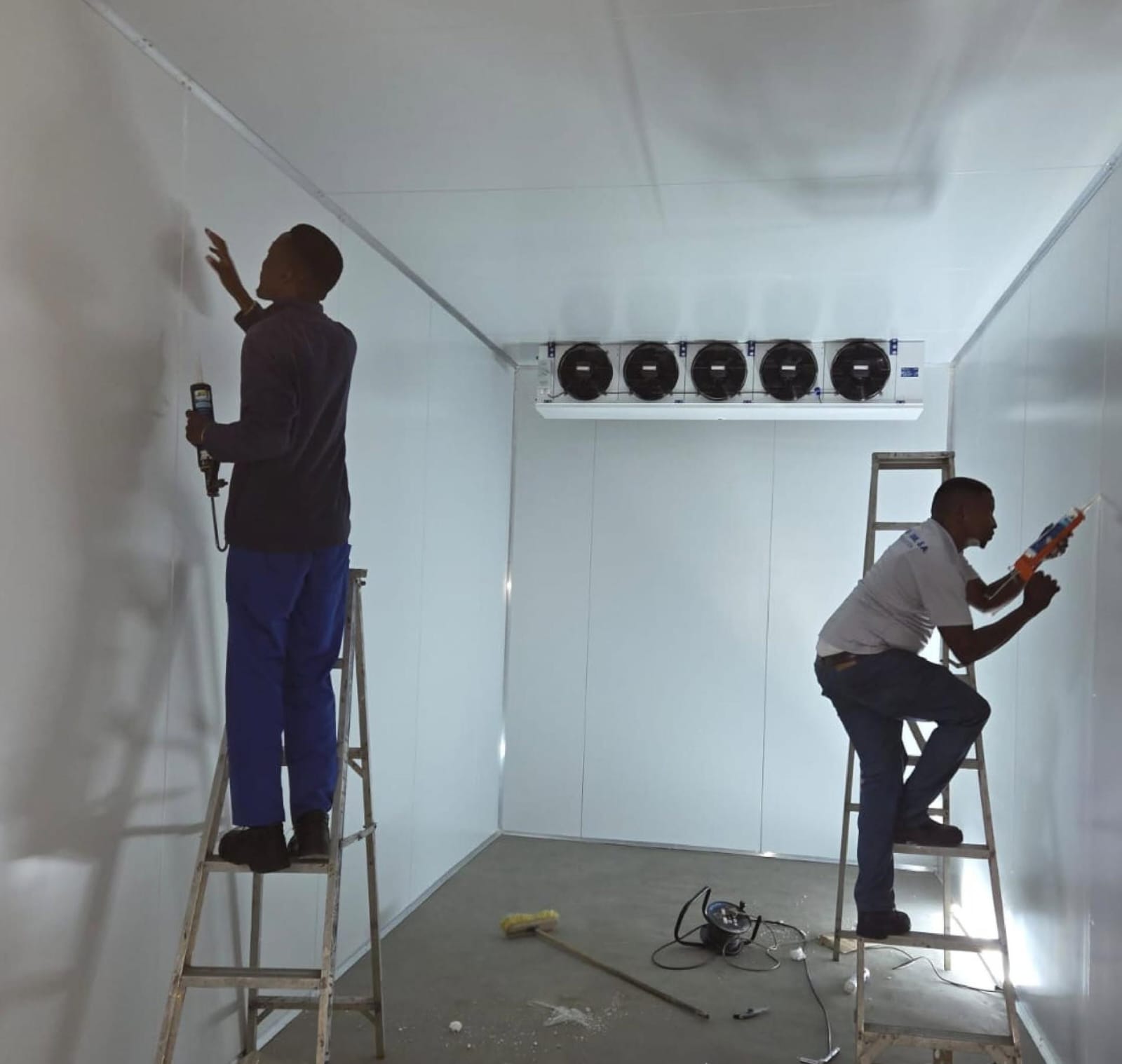


Cold Room Cost in Kenya: Installation Prices & What Determines the Cost
If you are planning to install a cold room in Kenya, one of the first questions you will probably ask is: how much does a cold room cost in Kenya?
There is no single price for a cold room because every installation is designed according to the required storage capacity, temperature, insulation, refrigeration equipment, room dimensions, location and intended use.
A small walk-in chiller for a restaurant will have very different requirements from a large freezer room for a food processor, supermarket, flower farm or distribution facility.
This guide explains the main factors that determine cold room installation cost in Kenya, the typical budget ranges to consider, and what you should include when requesting a quotation.
How Much Does a Cold Room Cost in Kenya?
As a general planning guide, cold room projects in Kenya can range from several hundred thousand shillings for smaller installations to several million shillings for larger or specialized systems.
Indicative ranges commonly used for budgeting include:
| Cold Room Size | Typical Volume | Indicative Budget |
|---|---|---|
| Small cold room | 10–20 m³ | KSh 400,000 – 1,000,000 |
| Medium cold room | 20–50 m³ | KSh 800,000 – 2,500,000 |
| Large cold room | 50–100+ m³ | KSh 2,000,000 – 5,000,000+ |
| Specialized / industrial systems | Custom | Quotation required |
These figures are budgetary estimates rather than fixed prices. The final cost depends on the design and refrigeration load of the individual project.
Current Kenyan industry pricing also shows substantial variation depending on size, temperature, insulation and equipment specification.
For an accurate price, the cold room should be sized according to the products being stored, required temperature, storage volume, loading frequency and operating conditions.
What Determines Cold Room Installation Cost in Kenya?
Several components contribute to the total cost of a cold room installation.
1. Cold Room Size and Storage Capacity
The physical size of the room is one of the most important cost factors.
A small cold room may be suitable for a butcher, restaurant, hotel, pharmacy or small food business, while larger installations may be required by supermarkets, food processors, agricultural businesses and cold-chain operators.
The quotation should therefore be based on the actual length, width, height and storage requirements rather than simply choosing a standard room size.
2. Chiller or Freezer Cold Room
The required operating temperature has a major effect on the refrigeration system and insulation specification.
Chiller Cold Rooms
Chiller rooms are generally used for products that require above-freezing temperatures.
Typical applications include:
- Fruits and vegetables
- Dairy products
- Fresh meat
- Fish
- Flowers
- Beverages
- Food ingredients
Depending on the application, operating temperatures may commonly fall within approximately 0°C to +8°C.
Freezer Cold Rooms
Freezer rooms are designed for products that need to remain frozen.
Typical applications include:
- Frozen meat
- Fish
- Frozen food
- Ice cream
- Poultry products
- Long-term frozen storage
Freezer rooms commonly operate around -18°C or below, depending on the product and storage requirements.
Freezer installations generally require more demanding insulation and refrigeration specifications than standard chilled storage.
3. Insulated Cold Room Panels
The insulation panels form the thermal envelope of the cold room.
The panel specification affects both the initial installation cost and the energy required to maintain the desired temperature.
Common insulation options include:
- Polyurethane (PU) insulated panels
- Expanded polystyrene (EPS) panels
- Different panel thicknesses depending on the application
The appropriate thickness should be selected according to the required temperature, room size and operating conditions.
A cheaper panel specification is not necessarily cheaper over the lifetime of the cold room if it results in greater heat gain and higher refrigeration energy consumption.
4. Refrigeration System
The refrigeration system is another major part of the investment.
Depending on the application, a cold room may include:
- Compressor
- Condensing unit
- Evaporator
- Condenser
- Refrigeration controls
- Temperature controller
- Expansion device
- Refrigerant piping
- Electrical controls
- Fans and other accessories
The required refrigeration capacity should be calculated from the actual heat load rather than selecting equipment based only on the room’s physical size.
Factors such as product temperature, quantity of product entering the room, door opening frequency and ambient temperature can all affect refrigeration capacity.
5. Cold Room Door
The door is an important part of the installation because frequent opening can introduce significant heat into the room.
Cold room doors may be designed with:
- Insulated construction
- Heavy-duty hinges
- Proper door seals
- Internal safety release
- Suitable door hardware
- Sliding or hinged configurations
The correct door specification depends on the room size and frequency of use.
6. Flooring
The floor specification depends on the application and operating temperature.
A cold room may require:
- Insulated flooring
- Reinforced flooring
- Hygienic floor finishes
- Drainage provisions
- Raised or specially insulated floor construction
Freezer rooms require particular attention to floor insulation because heat transfer through the floor can affect system performance.
7. Electrical Installation
The refrigeration equipment requires an appropriate electrical supply and control system.
Depending on the installation, costs may include:
- Electrical cabling
- Distribution board
- Refrigeration control panel
- Protection devices
- Temperature controllers
- Contactors and relays
- Voltage protection
- Installation and commissioning
The electrical requirements should be established before installation, particularly for larger refrigeration systems.
8. Location and Installation Logistics
The location of the project can affect the final quotation.
Installation costs may be influenced by:
- Distance from Nairobi or the installation base
- Transport requirements
- Accessibility of the site
- Availability of electricity
- Existing building structure
- Installation height
- Civil works
- Site preparation
- Accommodation and logistics for installation teams
This is why two cold rooms with similar dimensions can still have different installation costs.
Cold Room Cost Examples
Instead of looking only at the price of the panels or refrigeration unit, consider the complete installed system.
Small Cold Room
A small cold room may be suitable for:
- Butcheries
- Restaurants
- Small supermarkets
- Hotels
- Cafés
- Small food businesses
A project in this category may require a budget of approximately KSh 400,000 to KSh 1,000,000, depending on the temperature and specification.
Medium Cold Room
Medium-sized cold rooms are commonly used for:
- Hotels
- Supermarkets
- Restaurants
- Dairy businesses
- Food processors
- Agricultural businesses
A reasonable preliminary budget can be approximately KSh 800,000 to KSh 2,500,000, depending on the design.
Large Cold Room
Large cold storage facilities may be required for:
- Food processing
- Agricultural produce
- Flower farms
- Meat processing
- Fish storage
- Distribution centres
- Large supermarkets
These projects can run into several million Kenya shillings and should be individually designed and quoted.
What Is Included in a Cold Room Installation?
A complete cold room project may include:
- Cold room insulated panels
- Cold room door
- Refrigeration system
- Evaporator
- Condensing unit
- Refrigeration controls
- Temperature controller
- Refrigeration piping
- Electrical installation
- Installation labour
- Testing and commissioning
However, not every quotation includes the same items.
When comparing quotations, make sure you understand exactly what is included.
Chiller vs Freezer Cold Room Cost
One of the most common mistakes when budgeting is assuming that all cold rooms cost approximately the same.
A chiller and freezer may have completely different refrigeration and insulation requirements.
| Feature | Chiller Room | Freezer Room |
|---|---|---|
| Typical temperature | Around 0°C to +8°C | Around -18°C or below |
| Common products | Fresh produce, dairy, meat | Frozen food, meat, fish |
| Insulation requirement | Application dependent | Generally higher |
| Refrigeration requirement | Application dependent | Generally more demanding |
| Cost | Varies | Usually higher for comparable capacity |
The final specification should always be based on the product and required storage temperature.
Cold Room Applications in Kenya
Cold rooms are used across many industries.
Agriculture and Fresh Produce
Cold storage helps businesses manage temperature-sensitive produce after harvesting and during distribution.
Meat and Butcheries
Cold rooms provide controlled storage for fresh and frozen meat products.
Dairy
Milk and dairy products require appropriate temperature control throughout processing and storage.
Hotels and Restaurants
Hotels and restaurants use walk-in chillers and freezers to store food ingredients and reduce dependence on small commercial refrigerators.
Supermarkets
Supermarkets may require separate chilled and frozen storage areas for different product categories.
Pharmaceutical and Medical Storage
Some pharmaceutical and medical products require controlled temperature storage. These projects need specifications appropriate to the products and applicable requirements.
Flower Farms
Temperature-controlled storage can form an important part of the post-harvest handling process for flowers and other temperature-sensitive products.
How to Reduce Cold Room Operating Costs
The cheapest installation price is not always the lowest-cost solution in the long term.
When designing a cold room, consider:
Use Appropriate Insulation
Good insulation reduces heat transfer and can reduce the refrigeration load.
Select the Correct Refrigeration Capacity
An oversized or undersized refrigeration system can create unnecessary operating problems and costs.
Minimize Door Opening
Frequent door opening introduces warm air and increases the refrigeration load.
Maintain Door Seals
Damaged door seals allow cold air to escape and increase system workload.
Service the Refrigeration System
Regular maintenance can help identify issues before they result in major breakdowns or product losses.
What Should You Ask for When Requesting a Cold Room Quote?
When requesting a quotation, provide as much information as possible.
Ideally, provide:
- Required room dimensions
- Product to be stored
- Quantity of product
- Required temperature
- Expected daily product loading
- Location of the project
- Number of doors
- Available electrical supply
- Whether the room is a chiller or freezer
- Whether the room is new or an existing structure
This allows the refrigeration contractor to design the system correctly and provide a more useful quotation.
Why Choose The Cold Room Kahuna?
The Cold Room Kahuna provides cold room design, supply, installation, repair and maintenance services in Kenya and East Africa.
We provide customized solutions for applications including:
- Walk-in chillers
- Walk-in freezers
- Food storage
- Meat and dairy storage
- Agricultural produce
- Flower storage
- Pharmaceutical cold storage
- Mortuary cold rooms
- Industrial refrigeration
Our cold room solutions can be designed around the required temperature, storage capacity, room dimensions and operating conditions.
We also supply refrigeration equipment and components from established manufacturers including BITZER, Danfoss, Copeland and other refrigeration brands.
Get a Cold Room Installation Quote in Kenya
Planning to build a cold room?
The right investment depends on the application, storage capacity, temperature requirement and refrigeration design.
Contact The Cold Room Kahuna for a cold room consultation, site assessment and quotation.
We supply and install cold rooms across Kenya and also support projects in the wider East African region.
Call or WhatsApp: +254 745 105691
Email: info@thecoldroomkahuna.com
Website: www.thecoldroomkahuna.com
Frequently Asked Questions
How much does a cold room cost in Kenya?
Cold room costs vary according to size, temperature, insulation, refrigeration equipment and installation requirements. Small systems may start in the hundreds of thousands of Kenya shillings, while larger and specialized installations can cost several million shillings.
How much does a 10 cubic metre cold room cost in Kenya?
The cost depends on whether it is a chiller or freezer, the insulation specification, refrigeration equipment, door, electrical requirements and installation conditions. A quotation should therefore be based on the complete specification rather than volume alone.
How much does a freezer room cost in Kenya?
A freezer room generally requires more demanding refrigeration and insulation specifications than a comparable chiller. The exact cost depends on the room volume, target temperature, product load and refrigeration capacity.
How much does cold room installation cost?
Installation is only one part of the total project cost. The complete quotation may include insulated panels, refrigeration equipment, doors, electrical work, refrigeration piping, labour, testing and commissioning.
Can you install a custom cold room in Kenya?
Yes. Cold rooms can be designed according to the available space, storage capacity, products being stored and required temperature.
Do you install cold rooms outside Nairobi?
Yes. The Cold Room Kahuna provides cold room installation and refrigeration services across Kenya, with project support also available in the wider East African region.
Can I get a quotation for my cold room?
Yes. Provide the room dimensions, intended use, required temperature, location and expected product load so the system can be assessed and quoted appropriately.