
Why Proper Fresh Air Intake Is Important in Industrial Buildings, Warehouses and Commercial Kitchens

Industrial ventilation is not just about removing hot air, smoke, dust and unwanted fumes from a building. An effective ventilation system must also provide an adequate supply of fresh outdoor air to replace the air being extracted.

Factories, warehouses, workshops, commercial kitchens and agricultural buildings can experience poor ventilation when extraction fans operate without properly planned replacement-air openings. This can affect airflow, indoor conditions and the overall performance of mechanical ventilation systems.

For businesses in Kenya and across East Africa, proper fresh-air intake is an important consideration when designing, upgrading or maintaining industrial ventilation systems.

Whether you operate a manufacturing facility in Nairobi, a warehouse in Mombasa, a commercial kitchen in Kisumu or an agricultural facility in Tanzania, understanding how fresh-air intake works can help you make better ventilation decisions.

1. What Is Industrial Fresh Air Intake?

Industrial fresh-air intake refers to the controlled introduction of outdoor air into a building through designated openings or mechanical ventilation equipment.

In a mechanically ventilated building, extraction fans remove indoor air and create a pressure difference that encourages replacement air to enter through suitable intake points.

These intake points may include:

  • Industrial air inlet vents.
  • Fresh-air intake louvers.
  • Wall-mounted ventilation openings.
  • Mechanical fresh-air supply fans.
  • Ducted air intake systems.

The appropriate arrangement depends on the building size, ventilation requirements, occupancy, heat sources and type of activities taking place inside.

One important component is the industrial air inlet vent, which provides a designated opening for outdoor air to enter the building.

2. Why Do Industrial Buildings Need Proper Fresh-Air Intake?

Many businesses concentrate on purchasing powerful extraction fans without considering how replacement air will enter the building.

However, extraction and air intake need to work together.

When extraction fans remove large volumes of indoor air, the building needs a suitable replacement-air pathway. If the available intake openings are inadequate, the system may experience excessive negative pressure.

This can contribute to:

  • Reduced extraction airflow.
  • Difficulty opening and closing doors.
  • Uncontrolled air entry through gaps.
  • Uneven air distribution.
  • Poor ventilation performance.
  • Increased demand on mechanical ventilation equipment.

Providing appropriately sized and positioned air intake openings helps ventilation designers develop a more balanced system.

3. Fresh-Air Intake in Factories and Manufacturing Plants

Factories often generate heat, fumes, moisture and airborne contaminants through manufacturing activities and industrial processes.

Welding workshops, fabrication facilities, production plants and processing factories may require dedicated mechanical ventilation systems to remove unwanted indoor air.

Industrial extraction fans and centrifugal blowers can help remove air from designated areas, but sufficient replacement air must also be available.

Fresh-air intake louvers and industrial air inlet vents can provide designated entry points for outdoor air.

For larger manufacturing facilities, the ventilation design should consider:

  • Production equipment and heat-generating machinery.
  • Building dimensions and ceiling height.
  • Required extraction airflow.
  • Location of fresh-air intake openings.
  • Air distribution throughout the working area.
  • Filtration requirements where outdoor air contains dust or other contaminants.

For factories with significant heat or fumes, general ventilation may need to be supplemented with dedicated local exhaust systems.

4. Warehouse Ventilation and Fresh-Air Replacement

Large warehouses can accumulate heat, particularly in buildings with metal roofing, limited ventilation openings and high ceilings.

Storage facilities, distribution centres and industrial warehouses may experience uncomfortable indoor temperatures, especially during hot weather.

A mechanical ventilation system can help remove accumulated indoor heat and introduce replacement outdoor air.

However, installing extraction fans without considering fresh-air intake can limit the effectiveness of the overall arrangement.

Industrial air inlet vents can be installed at suitable positions to provide designated air entry points.

When designing warehouse ventilation, consider:

  • Total floor area and building height.
  • Number and capacity of extraction fans.
  • Position of air intake openings.
  • Heat generated by stored materials and equipment.
  • Outdoor temperature and humidity.
  • Air distribution across the warehouse.

For large warehouses, a professional ventilation assessment is recommended to determine the appropriate number of intake openings and extraction fans.

5. Fresh-Air Intake for Commercial Kitchens and Restaurants

Commercial kitchens depend on effective extraction systems to remove cooking fumes, smoke, grease-laden air and excess heat.

Kitchen extraction hoods are commonly connected to ductwork and extraction fans that discharge indoor air outside the building.

However, the air removed by the extraction system must be replaced.

Without sufficient replacement air, a kitchen may experience negative pressure, which can affect extraction performance and cause difficulties with doors and other building openings.

A properly designed replacement-air system can help address these issues.

Depending on the kitchen design, replacement air may be introduced through:

  • Dedicated fresh-air supply fans.
  • Ducted replacement-air systems.
  • Suitable wall-mounted air inlet louvers.
  • Engineered mechanical ventilation arrangements.

Replacement air should be planned carefully to avoid disturbing the extraction hood’s capture performance or creating uncomfortable draughts around cooking areas.

For commercial kitchens, replacement-air design should account for the extraction hood capacity, kitchen layout, cooking equipment and applicable safety requirements.

6. Workshop, Garage and Automotive Facility Ventilation

Automotive workshops, garages and mechanical service facilities may generate heat, exhaust fumes, dust and airborne contaminants.

Proper ventilation is essential for maintaining suitable indoor working conditions.

Industrial extraction fans can be used to remove unwanted indoor air, while suitable fresh-air intake arrangements provide replacement air.

Workshops with vehicle exhaust emissions or hazardous fumes may require dedicated local extraction equipment rather than relying solely on general ventilation.

Fresh-air intake vents can form part of a broader ventilation arrangement where the outdoor air supply is suitable for the application.

7. Fresh-Air Intake in Poultry Houses and Livestock Buildings

Agricultural buildings have particular ventilation requirements.

Poultry houses, broiler farms, layer houses and livestock facilities need carefully managed air movement to control temperature, moisture and indoor air quality.

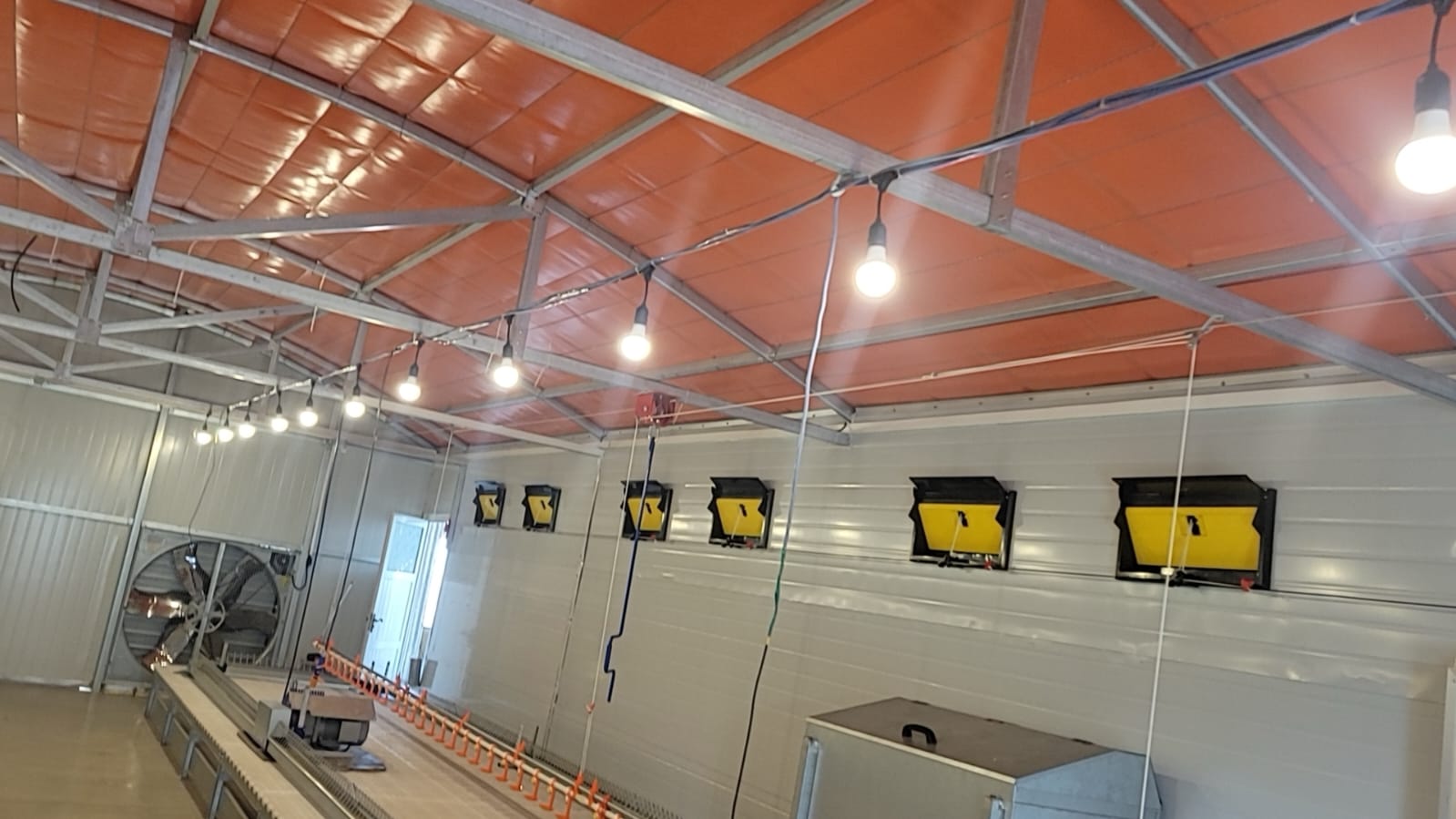
In mechanically ventilated poultry houses, extraction fans remove indoor air while air inlets provide pathways for fresh outdoor air to enter.

The positioning and adjustment of these inlets influence how incoming air moves through the building.

Poorly planned air entry can result in uneven distribution, stagnant areas or unwanted draughts.

For poultry ventilation systems, important considerations include:

  • Poultry house dimensions.
  • Bird age and stocking density.
  • Extraction fan capacity.
  • Number and positioning of air inlets.
  • Required air distribution.
  • Seasonal temperature and humidity conditions.

Manual and automatic air inlet systems are available for different ventilation designs. The correct choice depends on the building, management approach and ventilation requirements.

8. Manual Air Inlet Vents and Adjustable Directional Deflectors

Industrial air inlet vents are available in different designs and operating mechanisms.

Some models use automatic pressure-controlled opening systems, while others operate manually.

A manual air inlet vent allows the user to control the opening without relying on an automatic actuator or pressure-controlled mechanism.

Models featuring adjustable directional deflectors provide additional flexibility in directing incoming air.

This can be useful in ventilation arrangements where the direction of fresh-air entry needs to be adjusted according to the building layout.

For example, a wall-mounted inlet with an adjustable deflector can be incorporated into suitable factory, warehouse, workshop and agricultural ventilation systems.

The selection should consider the required airflow, opening dimensions, installation position and operating requirements.

9. How to Match Air Inlet Vents with Industrial Extraction Fans

An effective mechanical ventilation system requires coordination between air intake and extraction.

The extraction fans determine how much air is removed, while the available intake openings influence how replacement air enters the building.

When selecting equipment, consider the following:

Extraction fan capacity

Determine the required extraction airflow based on building volume, heat loads, occupancy and the nature of the activities inside.

Available intake area

Ensure the air intake openings provide sufficient free area for the required replacement airflow without excessive pressure losses.

Air distribution

Position intake openings to encourage suitable air movement through the occupied or working areas.

Building pressure

Consider the pressure relationship between the building interior and the outdoor environment.

Environmental conditions

Assess outdoor dust, rain exposure, temperature and humidity when selecting intake equipment.

The number of air inlet vents should not be selected simply by matching the number of extraction fans. A proper ventilation design must account for fan airflow, inlet free area, pressure losses and other system requirements.

For ducted ventilation projects and higher-pressure air movement applications, centrifugal blowers may also be appropriate.

10. Choosing the Right Industrial Air Inlet Vent

Before purchasing an air inlet vent, consider the following factors:

1. Material

Choose a material suitable for the installation environment. Plastic/PVC, aluminium and galvanised steel products are available for different applications.

2. Dimensions

Check the outer dimensions and required wall opening to ensure the product fits the intended installation location.

3. Opening mechanism

Determine whether a manual, automatic or motorised opening mechanism is appropriate.

4. Directional airflow

Adjustable directional deflectors can provide flexibility in controlling the direction of incoming air.

5. Environmental protection

Consider whether additional weather protection, insect screening or air filtration is required.

6. Ventilation capacity

Check the effective free area and pressure drop rather than relying on the outer dimensions alone.

11. Industrial Air Inlet Vents Available in Kenya

The Cold Room Kahuna supplies industrial ventilation equipment for factories, warehouses, workshops, commercial kitchens, agricultural buildings and other commercial applications in Kenya.

Our range includes the 600 × 300mm PVC Industrial Air Inlet Vent, featuring:

  • Plastic/PVC construction.
  • Manual opening mechanism.
  • Adjustable directional deflector.
  • Outer dimensions of 600 × 300mm.
  • Specified wall opening of 545 × 260mm.

This wall-mounted fresh-air intake louver provides a designated entry point for outdoor air in compatible mechanical ventilation systems.

Explore our 600 × 300mm PVC Industrial Air Inlet Vent.

We also supply industrial ventilation fans and centrifugal blowers for suitable air extraction and movement applications.

Explore our related products and services:

12. Industrial Ventilation Equipment Supply Across Kenya and East Africa

Choosing the right ventilation equipment is important for factories, warehouses, commercial kitchens, workshops and agricultural facilities.

The Cold Room Kahuna provides industrial ventilation and air movement equipment in Nairobi and across Kenya, with supply solutions for customers in Tanzania, Uganda, Rwanda and South Sudan.

Whether you are improving an existing ventilation system or planning a new project, we can assist with enquiries for suitable air inlet vents, industrial fans and centrifugal blowers.

Contact The Cold Room Kahuna

Phone / WhatsApp: +254 745 105691

Email: info@thecoldroomkahuna.com

Website: https://thecoldroomkahuna.com/

Contact us for industrial air inlet vents, ventilation equipment and fresh-air intake solutions in Kenya and East Africa.

Frequently Asked Questions

What is the purpose of a fresh-air intake vent?

A fresh-air intake vent provides a designated opening for outdoor air to enter a building. It is commonly used alongside mechanical extraction fans to provide replacement air in industrial and commercial ventilation systems.

Why do warehouses need fresh-air intake?

Warehouses may use mechanical extraction to remove accumulated heat and stale air. Fresh-air intake openings provide replacement air and help support the intended airflow through the building.

Can air inlet vents work with industrial extraction fans?

Yes. Air inlet vents can work alongside industrial extraction fans as part of a mechanical ventilation system. Their size, number and position should be selected according to the required airflow and pressure conditions.

What is the difference between manual and automatic air inlet vents?

Manual air inlet vents are operated by hand, while automatic models use mechanisms such as pressure control or actuators to regulate opening. The appropriate option depends on the ventilation design and operating requirements.

Where should industrial air inlet vents be installed?

Their position depends on the building layout, extraction fan locations, airflow requirements and intended air distribution. A ventilation assessment helps determine suitable installation positions.

Where can I buy industrial air inlet vents in Kenya?

The Cold Room Kahuna supplies industrial air inlet vents and ventilation equipment in Kenya. Contact +254 745 105691 for product enquiries, pricing and availability.
How to Reduce Heat Stress in Warehouses, Poultry Houses, Greenhouses and Industrial Buildings

Excessive heat can affect productivity, workplace comfort, livestock welfare and crop growth. In warehouses, poultry houses, greenhouses, cow sheds, boiler rooms and commercial kitchens, poor air circulation can allow heat and humidity to build up, creating uncomfortable and potentially hazardous working conditions.

The right industrial ventilation system can help remove accumulated hot air, improve air movement and support better environmental conditions. For businesses and farms in Kenya, Tanzania and South Sudan, choosing suitable industrial fans is an important step towards managing heat in demanding environments.

The Cold Room Kahuna supplies industrial fans, centrifugal blowers and ventilation solutions for commercial, agricultural and industrial applications. We help customers identify suitable equipment for their ventilation requirements, with supply and installation options available for projects across Kenya and the wider East African region.

What Causes Heat Stress in Industrial Buildings and Agricultural Facilities?

Heat stress occurs when the body or an animal struggles to lose enough heat to maintain a safe internal temperature. In buildings, excessive temperatures may result from direct sunlight, hot machinery, boilers, cooking equipment, high humidity, inadequate air exchange or insufficient ventilation.

Common causes include:

  • Poor airflow and stagnant air inside buildings.
  • Heat generated by industrial machinery and production processes.
  • Hot roofs and walls exposed to direct sunlight.
  • High humidity caused by steam, moisture or agricultural activities.
  • Inadequate removal of hot air from enclosed spaces.
  • Insufficient ventilation in livestock housing and greenhouses.
  • Poorly designed or undersized ventilation equipment.

Installing an industrial fan can improve air movement, but the solution must match the source of heat and the building’s ventilation requirements. Some applications need general air circulation, while others require hot air to be extracted and replaced with fresh air.

1. How to Reduce Heat Buildup in Warehouses and Factories

Warehouses and factories can become excessively hot, especially when they have large metal roofs, limited ventilation, heat-producing machinery or high ceilings. Workers may experience discomfort, fatigue and reduced productivity, while certain products and equipment may require controlled environmental conditions.

Recommended ventilation solutions

Industrial axial fans: These move relatively large volumes of air and can be suitable for general ventilation, wall-mounted installations and moving air through appropriate openings.

High-volume industrial fans: Depending on the model and installation, these can help improve air movement across large working areas.

Centrifugal blowers: These are useful where air must be pushed through ductwork or systems with greater resistance. The required airflow and static pressure must be considered when selecting the blower.

Roof and wall ventilation: Properly positioned fans and air inlets can help remove accumulated hot air and allow replacement air to enter the building.

Before selecting a fan, consider the warehouse floor area, ceiling height, heat sources, number of workers, available openings and required air changes. A large building may need several strategically positioned fans rather than one powerful unit.

Explore our industrial fans for sale in Kenya for equipment suitable for a range of industrial and commercial ventilation applications.

2. How to Reduce Heat Stress in Poultry Houses

High temperatures can place significant stress on chickens, particularly in densely stocked poultry houses with inadequate air movement. Heat stress can affect feed intake, growth, egg production and bird welfare.

A suitable poultry ventilation system helps manage heat, moisture and air quality while supporting the birds’ environmental requirements.

Ventilation measures for poultry farms

  • Install correctly sized ventilation fans based on the poultry house dimensions, stocking density and required airflow.
  • Provide suitable air inlets so replacement air can enter without creating unwanted dead zones.
  • Position fans to support the intended airflow pattern throughout the poultry house.
  • Maintain fan blades, shutters, motors and other ventilation components.
  • Monitor temperature, humidity and bird behaviour to identify potential heat stress.
  • Consider supplementary cooling where ventilation alone cannot maintain suitable conditions.

The correct fan capacity depends on the birds’ age, stocking density, house design and local climate. Simply installing a larger fan does not guarantee effective cooling if the air inlets and airflow pattern are inadequate.

The Cold Room Kahuna can help you explore suitable poultry house ventilation systems for poultry farming operations.

3. Greenhouse Ventilation for Better Crop Growing Conditions

Greenhouses trap solar heat to create conditions that support plant growth. However, excessive temperatures and humidity can damage crops, reduce productivity and encourage certain plant diseases.

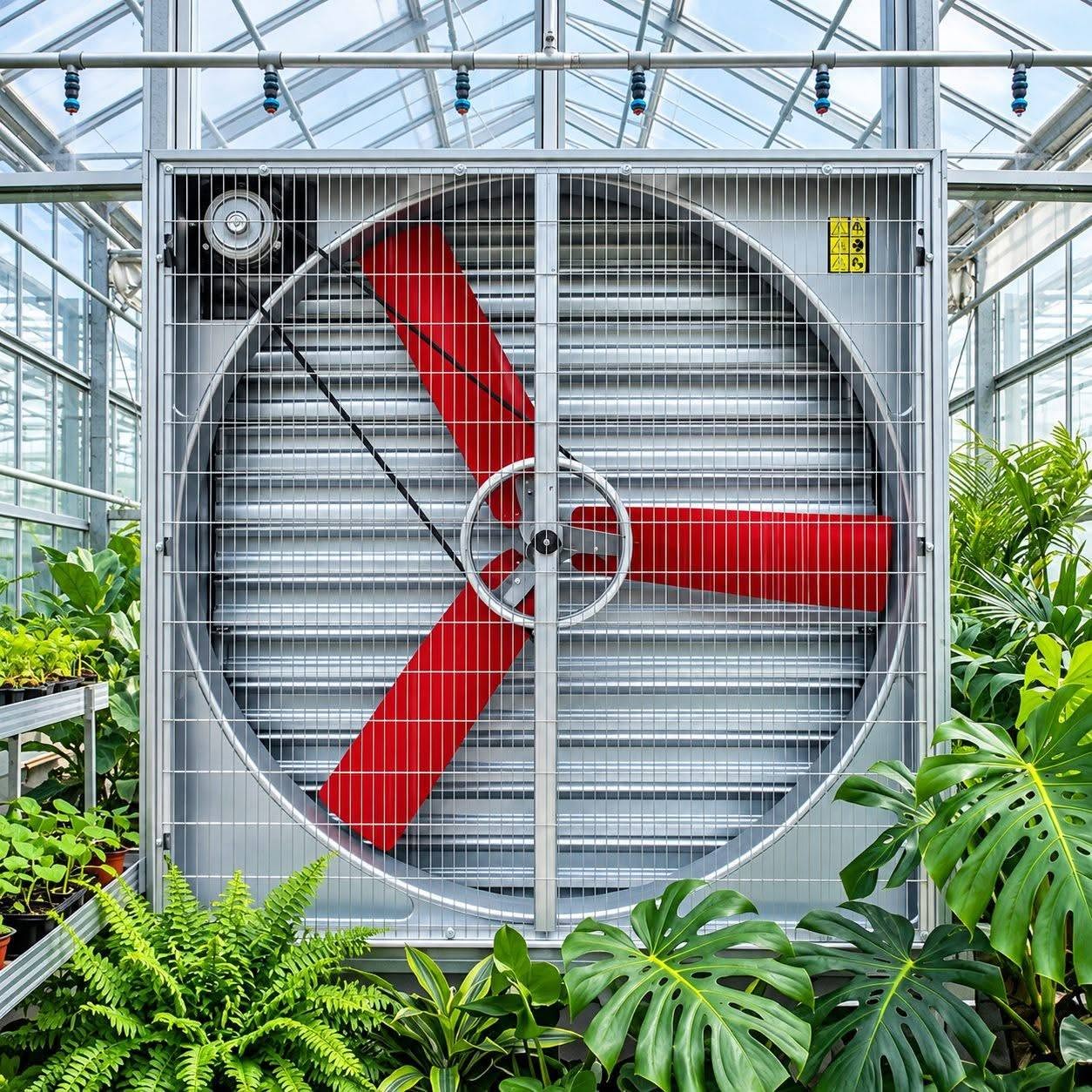
Greenhouse ventilation helps remove hot air and regulate the growing environment.

Suitable greenhouse ventilation options

Exhaust and extraction fans: These remove warm air from the greenhouse when appropriately installed with sufficient replacement-air openings.

Circulation fans: These help distribute air within the greenhouse, reducing stagnant areas and supporting more uniform conditions. They do not necessarily remove heat from the building.

Combined ventilation systems: Depending on the greenhouse design and climate, a combination of extraction, circulation, shading and supplementary cooling may be necessary.

When selecting greenhouse fans, consider the crop type, greenhouse dimensions, growing season, humidity, available openings and desired temperature range.

For example, a greenhouse used for leafy vegetables may have different environmental requirements from one growing flowers, seedlings or heat-sensitive crops.

Learn more about our agricultural ventilation fans in Kenya and East Africa and explore options for improving airflow in agricultural buildings.

4. Improving Ventilation in Cow Sheds and Dairy Barns

Dairy cows are sensitive to heat stress, which can affect feed intake, milk production, reproduction and overall welfare. Cow sheds with poor airflow can become particularly uncomfortable during hot weather, when moisture and heat accumulate around the animals.

Industrial circulation fans can help improve air movement around livestock, provided they are installed and sized correctly.

How industrial fans can help dairy farms

  • Improve air movement around resting and feeding areas.
  • Help cows lose body heat through convection and evaporation when environmental conditions permit.
  • Reduce stagnant air in poorly ventilated areas.
  • Support a wider heat-management plan that may include shade, drinking water and other cooling measures.
  • Improve ventilation when combined with suitable openings and fresh-air supply.

Fan placement matters. Air should reach the areas occupied by the animals rather than simply circulate near the roof.

Where humidity is high, evaporative cooling may be less effective. Misting or sprinkling systems must therefore be selected and managed carefully, with adequate ventilation to avoid increasing indoor humidity unnecessarily.

For larger dairy barns and livestock facilities, fan selection should consider the building layout, herd size, animal comfort requirements and prevailing weather conditions.

5. Controlling Heat in Boiler Rooms and Industrial Production Areas

Boiler rooms, manufacturing plants and process areas may experience intense heat from equipment, hot surfaces, steam lines and industrial operations. Excessive temperatures can create uncomfortable working conditions and may affect equipment operating conditions.

Industrial ventilation can help remove accumulated heat and provide replacement air where required.

Choosing the right ventilation equipment

Axial ventilation fans may be suitable for general air movement and ventilation where system resistance is relatively low.

Centrifugal blowers may be more appropriate when air must travel through ductwork, filters or other components that create significant resistance.

Dedicated heat-extraction systems can be designed to capture heat near its source, reducing the amount that spreads through the building.

The selection process should account for air temperature, required airflow, static pressure, motor suitability, dust or contaminants, and the installation environment.

Boiler rooms also require ventilation designed around combustion-air requirements and applicable safety standards. General-purpose fans must not be treated as a substitute for correctly designed combustion or hazardous-area ventilation systems.

Where equipment produces hot air at a specific point, capturing and removing it close to the source may be more effective than relying entirely on general room ventilation.

Explore our industrial centrifugal fans and blowers for applications requiring ducted airflow or pressure suited to the ventilation system.

6. Reducing Heat in Commercial Kitchens

Commercial kitchens in hotels, restaurants, catering facilities and institutional kitchens can become very hot during busy operating periods. Cooking equipment generates heat, steam, grease-laden air and odours that must be managed by a suitable ventilation system.

A properly designed kitchen ventilation system can improve working conditions and remove contaminants from cooking areas.

Recommended commercial kitchen ventilation measures

  • Install an appropriately designed kitchen extraction hood above relevant cooking equipment.
  • Use compatible fans and ductwork designed for the required airflow and system resistance.
  • Provide sufficient replacement air to support effective extraction.
  • Ensure grease management, cleaning access and maintenance arrangements are included in the design.
  • Follow applicable fire-safety requirements for grease-laden exhaust systems.
  • Assess whether additional general ventilation is needed to control heat elsewhere in the kitchen.

A standard industrial circulation fan cannot replace a properly designed kitchen extraction hood where cooking fumes, grease and contaminants must be captured at source.

For commercial kitchens, restaurants, hotels and catering facilities, explore our commercial kitchen hood system for suitable extraction solutions.

7. How to Choose the Right Industrial Fan for Heat Control

Not every industrial fan performs the same function. Selecting the correct model involves understanding the heat source, the building layout and the airflow needed to achieve the intended result.

Industrial axial fans

Axial fans move air generally parallel to the fan shaft. Depending on the model and installation, they can be suitable for wall-mounted ventilation, general air exchange and moving air through large openings.

Common applications include warehouses, workshops, agricultural buildings and selected industrial ventilation systems.

Centrifugal fans and blowers

Centrifugal fans move air using a rotating impeller and can be suitable for applications where ductwork or other system components create greater resistance.

They are commonly considered for industrial process ventilation, ducted air movement and selected heat-extraction applications.

Air circulation fans

Circulation fans help distribute air around an occupied space. They can be useful in workshops, livestock buildings and other areas where stagnant air is a concern.

However, circulating air within a room is different from extracting hot air and replacing it with fresh air. The appropriate approach depends on the actual problem.

Important factors when sizing industrial fans

Before purchasing a fan, assess:

  1. Building dimensions: Floor area, ceiling height and the volume of air within the space.
  2. Heat load: Heat from machinery, sunlight, boilers, cooking equipment, animals or other sources.
  3. Required airflow: The amount of air that must be moved to meet the ventilation objective.
  4. Static pressure: Resistance created by ductwork, filters, shutters, hoods and other components.
  5. Air temperature and contaminants: The fan, motor and materials must be suitable for the operating environment.
  6. Installation location: Wall, roof, duct, floor or another suitable mounting arrangement.
  7. Maintenance: Access for cleaning, inspections, repairs and replacement of components.

A fan’s advertised airflow does not necessarily represent the airflow it will deliver after installation. Ductwork, shutters, filters and other resistance can reduce performance. Professional selection helps ensure the equipment suits the application.

Browse our industrial fan range or explore our centrifugal fan and blower options to identify equipment for your project.

8. Why Industrial Fan Installation and Maintenance Matter

Even a high-quality industrial fan may perform poorly if it is incorrectly positioned, undersized or installed without adequate replacement-air openings.

A well-planned ventilation installation should consider the movement of air through the entire building, including where hot air accumulates and where replacement air enters.

Regular maintenance is also important for reliable operation.

Recommended maintenance activities include:

  • Inspecting and cleaning fan blades and protective guards.
  • Checking motors, bearings, belts and pulleys where applicable.
  • Inspecting shutters, dampers and air inlets for obstructions.
  • Checking electrical connections and protective devices.
  • Monitoring unusual vibration, noise or reduced airflow.
  • Confirming that the ventilation system continues to meet operational requirements.

For facilities with heavy dust, moisture or corrosive conditions, equipment specifications and maintenance intervals should reflect the actual operating environment.

9. Industrial Fans and Ventilation Solutions in Kenya, Tanzania and South Sudan

Businesses across East Africa operate warehouses, poultry farms, greenhouses, dairy facilities, factories, commercial kitchens and other buildings where heat management is important.

The Cold Room Kahuna supplies industrial fans and ventilation equipment for a range of applications, helping customers identify options based on their site conditions and operational requirements.

Whether you are improving ventilation in a poultry house, managing heat in a warehouse, installing airflow equipment in a greenhouse or planning a blower for an industrial process, choosing the right equipment is essential.

When enquiring about a ventilation solution, provide the following information where available:

  • Your location and type of facility.
  • Building length, width and height.
  • The main source of heat or ventilation problem.
  • Any existing fans, air inlets or ductwork.
  • Preferred installation location.
  • Available electrical supply.
  • Any airflow, temperature or pressure requirements already established.

This information helps determine which fan types and installation arrangements may be suitable for your application.

Contact The Cold Room Kahuna to discuss industrial fan supply and installation for your facility in Kenya, Tanzania, South Sudan and the wider East African region.

Frequently Asked Questions About Industrial Fans and Heat Stress

Can industrial fans reduce heat stress in warehouses?

Industrial fans can help remove accumulated hot air or improve air movement, depending on their type and installation. Their effectiveness depends on the heat load, outside conditions, building design and ventilation arrangement. Where outside air is hotter than the indoor air, bringing it inside may not provide cooling, so the system must be assessed carefully.

Which industrial fan is suitable for a poultry house?

The suitable fan depends on the poultry house dimensions, bird age, stocking density, local climate and required ventilation rate. Correct fan sizing, air inlets and airflow distribution are all important for maintaining appropriate conditions.

Can industrial fans be used in greenhouses?

Yes. Suitable extraction and circulation fans can help manage greenhouse airflow and temperature. The system should be selected according to crop requirements, greenhouse design, humidity and local weather conditions.

Are centrifugal blowers suitable for industrial heat extraction?

Centrifugal blowers can be suitable for applications involving ductwork or higher system resistance, provided the fan’s performance matches the required airflow and static pressure. The operating temperature and nature of the air must also be considered.

How can heat be reduced in a commercial kitchen?

A properly designed kitchen hood and extraction system can capture cooking fumes, steam and heat near their source. Adequate replacement air, suitable ductwork, maintenance and compliance with applicable fire-safety requirements are also essential.

Do industrial fans always lower room temperature?

No. Fans move air, but they do not automatically lower the air temperature. They may improve human comfort or help remove heat when the system is appropriately designed. In some environments, additional cooling, shading, insulation or other heat-control measures may be necessary.

Does The Cold Room Kahuna supply and install industrial fans in Kenya?

The Cold Room Kahuna supplies industrial fans and ventilation equipment and can discuss suitable installation options for commercial, agricultural and industrial projects. Contact the team with your application and location to discuss your requirements.

Get the Right Industrial Fan for Your Facility

Do not let excessive heat and poor air circulation go unaddressed in your warehouse, poultry house, greenhouse, dairy barn, boiler room or commercial kitchen.

The Cold Room Kahuna can help you explore industrial fans, centrifugal blowers and ventilation solutions suited to your application.

Request a quotation for industrial fans and ventilation equipment in Kenya, Tanzania or South Sudan. Share your building dimensions, application and ventilation challenges so the appropriate equipment can be considered.

Visit our industrial fans for sale in Kenya page or explore our centrifugal fans and blowers to get started.

The Cold Room Kahuna — Industrial fan supply and ventilation solutions for Kenya and East Africa.

Industrial facilities generate large amounts of dust, fine particles, smoke, and airborne contaminants every day. Without an efficient dust collection system, these particles can reduce equipment lifespan, contaminate products, create unsafe working environments, and lower productivity.

At The Cold Room Kahuna, we supply industrial centrifugal fans and dust collector blowers in Kenya, serving customers across Uganda, Tanzania, Rwanda, South Sudan, Ethiopia, and East Africa. Our high-performance industrial blowers are designed for reliable dust extraction, pneumatic conveying, woodworking, grain handling, cement processing, and many other industrial applications.

What is a Dust Collector Fan?

A dust collector fan, also called a dust extraction blower, is the heart of any dust collection system. It creates the airflow needed to capture dust from production equipment and transport it through ductwork into filters, cyclones, or baghouses.

Unlike ordinary ventilation fans, dust collector fans are specifically engineered to:

  • Move air at high pressure
  • Handle dust-laden air
  • Maintain constant airflow
  • Operate continuously in industrial environments
  • Support filtration systems efficiently

Most industrial dust collection systems use centrifugal blowers because they generate significantly higher static pressure than axial fans.

Why Centrifugal Fans are Best for Dust Collection

Dust extraction systems require high pressure to overcome resistance from:

  • Long ductwork
  • Multiple bends
  • Air filters
  • Cyclone separators
  • Bag filters
  • Dust collection hoods

This is why centrifugal blowers are the preferred solution.

Benefits include:

✔ High static pressure

✔ Continuous industrial operation

✔ Excellent airflow stability

✔ Long service life

✔ Low maintenance

✔ Better dust transport efficiency

✔ Suitable for abrasive particles

Industries That Need Dust Collector Blowers

Our industrial centrifugal dust collection fans are widely used in:

Woodworking Industry

Wood processing generates:

  • Sawdust
  • Wood chips
  • Sanding dust
  • Fine particles

Dust collectors help maintain clean workshops while protecting workers and machinery.

Furniture Manufacturing

Furniture factories produce large quantities of airborne dust from:

  • Cutting
  • Planing
  • Routing
  • Sanding
  • Finishing

Efficient dust extraction improves product quality and workplace safety.

Grain Processing

Grain facilities require dust extraction during:

  • Milling
  • Cleaning
  • Conveying
  • Storage

Dust collection reduces contamination and explosion risks.

Cement Plants

Cement manufacturing creates:

  • Cement dust
  • Limestone dust
  • Clinker particles

Heavy-duty centrifugal blowers maintain proper dust control throughout production.

Food Processing

Dust extraction is essential for:

  • Flour mills
  • Sugar factories
  • Coffee processing
  • Tea factories
  • Spice production

Proper airflow improves hygiene and equipment performance.

Metal Fabrication

Dust collectors remove:

  • Grinding dust
  • Welding fumes
  • Metal particles
  • Polishing debris

Textile Industry

Textile plants generate:

  • Cotton lint
  • Fabric fibres
  • Fine dust

Efficient extraction keeps machinery clean while improving air quality.

Pharmaceutical Manufacturing

Dust collection is critical for:

  • Powder handling
  • Mixing
  • Packaging
  • Tablet production

Plastic Recycling

Dust generated during:

  • Crushing
  • Grinding
  • Pellet production

requires continuous extraction using industrial blowers.

How a Dust Collection System Works

A complete dust collection system consists of:

1. Capture Hood

Collects dust directly from the machine.

↓

2. Ducting

Carries contaminated air.

↓

3. Centrifugal Dust Collector Fan

Creates suction and airflow.

↓

4. Cyclone Separator or Bag Filter

Separates dust from clean air.

↓

5. Clean Air Discharge

Returns filtered air safely.

The centrifugal blower is the engine that powers the entire system.

Types of Dust Collector Fans

High Pressure Centrifugal Fans

Here

Suitable for:

  • Long duct systems
  • Fine dust
  • Multiple machines
  • Industrial filtration

Medium Pressure Blowers

Ideal for:

  • Workshops
  • Woodworking
  • Small factories

Heavy Duty Industrial Blowers

Here

Designed for:

  • Mining
  • Cement
  • Steel
  • Grain processing
  • Continuous operation

Key Features of Our Dust Collector Blowers

Our industrial blowers offer:

  • High airflow performance
  • High static pressure
  • Energy-efficient motors
  • Heavy-duty steel construction
  • Low vibration
  • Long bearing life
  • Continuous-duty operation
  • Custom sizing available
  • Easy maintenance
  • Suitable for indoor and outdoor installation

Benefits of Installing a Dust Collector Fan

Cleaner Working Environment

Dust is removed before it spreads throughout the factory.

Improved Worker Safety

Reducing airborne particles helps improve air quality and creates a healthier workplace.

Longer Equipment Life

Dust accumulation damages motors, bearings, electrical systems, and production machinery.

Proper extraction reduces maintenance costs.

Better Product Quality

Dust contamination can affect manufacturing accuracy and product cleanliness.

Improved Compliance

Many industries must comply with workplace air quality and occupational safety standards.

Increased Productivity

Clean production environments reduce downtime caused by dust accumulation.

Choosing the Right Dust Collector Blower

Selecting the correct blower depends on:

  • Airflow (m³/h)
  • Static pressure (Pa)
  • Dust type
  • Particle size
  • Temperature
  • Duct length
  • Number of collection points
  • Filter resistance
  • Operating hours

Choosing the wrong blower can lead to:

  • Poor suction
  • High energy consumption
  • Frequent breakdowns
  • Reduced dust collection efficiency

Why Choose The Cold Room Kahuna?

At The Cold Room Kahuna, we provide reliable industrial ventilation solutions tailored to the needs of East African industries.

We offer:

Whether you need a blower for a small woodworking shop or a large industrial dust extraction system, we can help you choose the right solution for your airflow and pressure requirements.

Frequently Asked Questions

What fan is best for dust collection?

A centrifugal blower is the best option because it produces the high static pressure required to move dust through filters and duct systems.

Can axial fans be used for dust extraction?

Axial fans are generally designed for moving large volumes of air with low pressure and are not suitable for most industrial dust collection systems.

What industries use dust collector blowers?

Woodworking, grain processing, cement manufacturing, food processing, pharmaceutical production, metal fabrication, mining, plastics recycling, textile manufacturing, and many other industries.

Do you supply dust collector fans in East Africa?

Yes. The Cold Room Kahuna supplies industrial dust collection blowers and centrifugal fans across Kenya, Uganda, Tanzania, Rwanda, South Sudan, and neighbouring East African countries.

Conclusion

An efficient dust collection system depends on the performance of its blower. High-quality Centrifugal dust collector fans  provide the pressure and airflow needed to maintain clean, safe, and productive industrial environments.

Whether you’re operating a sawmill, grain mill, cement plant, furniture workshop, or manufacturing facility, investing in the right industrial blower improves air quality, protects equipment, and enhances overall operational efficiency.

If you’re looking for industrial dust collector fans, centrifugal blowers, or dust extraction systems in Kenya and East Africa, The Cold Room Kahuna offers dependable solutions backed by technical expertise and regional support.

How Data Center Cooling Systems Work in Kenya: Server Room Cooling Explained.

Data centers and server rooms are the heart of modern businesses in Kenya. They power banking systems, telecom networks, cloud storage, government systems, and corporate IT operations.

However, these systems generate a large amount of heat. Without proper cooling, servers can fail, slow down, or shut down completely.

This is why Data Center Cooling Systems in Kenya are essential for business continuity and data protection.

In this article, we explain how server room cooling works and how air conditioning systems and industrial ventilation fans work together to protect IT infrastructure.

Why Data Centers Need Cooling

Servers run 24/7 and produce constant heat. When temperatures rise above safe levels, problems begin to appear.

Poor cooling can cause:

  • System overheating
  • Data loss or corruption
  • Network downtime
  • Reduced hardware lifespan
  • High repair costs

Because of these risks, every server room must have a reliable cooling system.

How Data Center Cooling Systems Work

Data center cooling systems work by controlling three main factors:

  • Temperature
  • Airflow
  • Humidity

The goal is simple: remove hot air from equipment and replace it with cool, controlled air.

This is achieved using a combination of systems such as:

  • Air conditioning units (AC systems)
  • CRAC units
  • HVAC systems
  • Industrial ventilation fans

Role of Air Conditioning (AC) in Server Rooms

Air conditioning systems are the primary cooling solution in most server rooms in Kenya.

They work by:

  • Extracting warm air from equipment
  • Cooling it using refrigerant systems
  • Releasing cooled air back into the room

Why AC systems are important:

  • Maintain stable temperature
  • Control humidity levels
  • Provide continuous cooling
  • Protect sensitive IT equipment

In small and medium server rooms, split or precision air conditioning systems are commonly used.

In larger facilities, CRAC (Computer Room Air Conditioning) units are preferred for higher accuracy and continuous operation.

Role of Industrial Ventilation Fans

Industrial ventilation fans are a critical but often overlooked part of data center cooling.

They do not replace AC systems — instead, they support them.

How industrial fans help:

  • Improve air circulation
  • Remove trapped hot air
  • Eliminate hot spots in server racks
  • Support HVAC and AC systems
  • Reduce cooling system workload
  • Improve energy efficiency

In many Kenyan server rooms, poor airflow is a bigger problem than lack of cooling equipment. Industrial fans solve this by ensuring constant movement of air.

They are commonly installed in:

  • Server rooms
  • UPS battery rooms
  • Telecom equipment rooms
  • Network cabinets

Combined Cooling System Approach

The most effective data center cooling systems in Kenya use a combined approach:

1. Air Conditioning Systems

Provide primary cooling and temperature control.

2. Industrial Ventilation Fans

https://thecoldroomkahuna.com/product/industrial-fan/

Improve airflow and remove hot air pockets.

3. HVAC Systems

Manage overall building air balance and ventilation.

4. CRAC Units

Deliver precision cooling for large data centers.

When all systems work together, they create a stable and efficient cooling environment.

Airflow Management in Server Rooms

Good airflow design is just as important as cooling equipment.

Proper airflow ensures:

  • Cold air reaches server intakes
  • Hot air is removed efficiently
  • No mixing of hot and cold air
  • Balanced temperature across the room

Without airflow management, even powerful AC systems become inefficient.

Common Cooling Problems in Kenya

Many server rooms face challenges such as:

  • Overloaded cooling systems
  • Poor ventilation design
  • Lack of backup cooling
  • Dust and blocked airflow
  • High ambient temperatures

These problems increase the risk of downtime and equipment failure.

Professional Cooling Solutions in Kenya

https://thecoldroomkahuna.com/service/data-center-server-room-cooling-systems-kenya/

At The Cold Room Kahuna, we design and install complete Data Center & Server Room Cooling Systems in Kenya.

Our solutions include:

  • Precision air conditioning systems
  • CRAC units
  • HVAC systems
  • Industrial ventilation fans
  • Airflow management systems
  • Maintenance and repair services

We ensure your IT infrastructure stays cool, stable, and fully operational.

👉 Learn more: Data Center & Server Room Cooling Systems Kenya

Benefits of Proper Cooling Systems

A well-designed cooling system provides:

  • Reliable system performance
  • Reduced downtime
  • Longer equipment lifespan
  • Lower energy costs
  • Improved data protection
  • Better operational efficiency

Conclusion

Data center cooling is not just about air conditioning — it is a complete system that combines AC units, CRAC systems, HVAC solutions, and industrial ventilation fans.

In Kenya, where temperatures can rise and power systems are critical, proper cooling is essential for every business that depends on IT infrastructure.

With the right design and professional installation, you can ensure maximum reliability and performance for your server room.

Proper ventilation is essential in industrial, agricultural, and commercial environments where heat, humidity, and poor air circulation can affect productivity and safety. One of the most effective ways to improve airflow in large spaces is through the use of industrial fans and portable industrial fans.

Industrial fans are designed to move large volumes of air, helping to cool large areas, remove stagnant air, and improve working conditions. Unlike small household fans, industrial ventilation fans are built with powerful motors and durable materials that allow them to operate continuously in demanding environments.

In Kenya, the demand for industrial and portable fans has increased significantly due to the rapid growth of warehouses, manufacturing plants, agricultural facilities, and commercial buildings.

At The Cold Room Kahuna, we supply and install industrial fans and portable industrial fans in Kenya, providing reliable ventilation solutions for businesses across multiple industries.

What Are Industrial Fans?

Industrial fans are high-capacity ventilation equipment designed to circulate air in large indoor or outdoor spaces. They are commonly used in environments where natural ventilation is not sufficient to maintain comfortable temperatures.

These fans are typically larger and more powerful than residential fans and are capable of moving thousands of cubic feet of air per minute (CFM).

Industrial fans are available in several designs including:

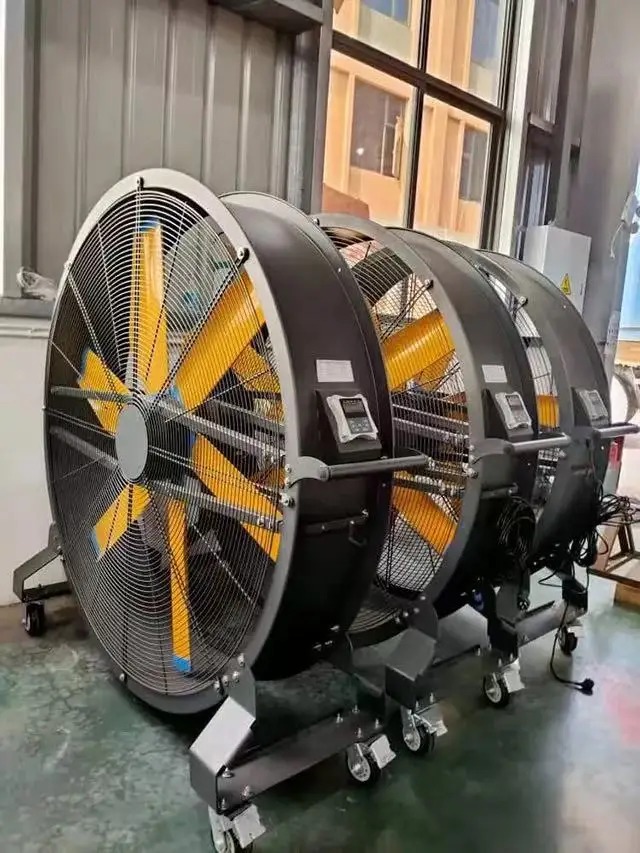
  • Portable industrial fans
  • Wall-mounted industrial fans
  • Ceiling-mounted HVLS fans
  • Pedestal industrial fans
  • Exhaust ventilation fans

Each type is designed to address specific ventilation needs in different environments.

What Are Portable Industrial Fans?

Portable industrial fans are a special category of industrial ventilation equipment designed with mobility and flexibility in mind.

Unlike fixed fans that remain permanently installed, portable industrial fans are equipped with wheels and handles, allowing them to be easily moved from one location to another.

This makes them ideal for environments where airflow needs change frequently.

Portable industrial fans are widely used in:

  • Warehouses
  • Factories
  • Workshops
  • Construction sites
  • Agricultural facilities
  • Event venues

Their portable wheeled design allows easy movement, making them one of the most versatile ventilation solutions available.

Key Features of Industrial and Portable Fans

High Airflow Capacity

Industrial fans are designed to move large volumes of air efficiently. This powerful airflow helps reduce heat buildup and improve ventilation in large spaces.

High airflow capacity is particularly important in warehouses and manufacturing plants where large areas require constant air circulation.

Heavy Duty Construction

Industrial fans are built to operate in demanding environments. Most models feature:

  • Strong steel frames
  • Reinforced protective grills
  • Heavy-duty motors
  • Durable aluminum or steel fan blades

This construction ensures reliability even in harsh working conditions.

Portable Wheeled Design

Portable industrial fans include strong wheels and stable frames, allowing them to be moved easily between work areas.

This flexibility makes them ideal for temporary ventilation needs.

Adjustable Airflow Direction

Many industrial fans allow users to adjust the direction of airflow by tilting the fan head.

This allows targeted ventilation where airflow is most needed.

Energy Efficient Operation

Despite their powerful performance, modern industrial fans are designed to operate efficiently, helping businesses reduce energy consumption.

PURCHASE HERE.

Applications of Industrial and Portable Fans in Kenya

Industrial ventilation fans are widely used across multiple industries in Kenya.

Warehouse Ventilation

Warehouses often experience poor airflow due to their large size and high ceilings.

Industrial fans help:

  • Improve air circulation
  • Reduce heat buildup
  • Maintain comfortable working conditions

Portable industrial fans are particularly useful in warehouses because they can be moved to areas where ventilation is required.

Businesses installing Cold Room Installation in Nairobi often use industrial fans in surrounding storage areas to maintain proper airflow.

Factory and Manufacturing Plants

Factories generate heat from machinery and production processes.

Industrial fans help cool work areas while improving air circulation around equipment.

Benefits include:

  • Improved worker comfort
  • Reduced heat stress
  • Increased productivity

Workshops and Garages

Mechanical workshops and garages produce fumes, dust, and heat from equipment and engines.

Portable industrial fans help remove contaminated air while improving ventilation.

This creates safer working environments.

Agricultural Facilities

Industrial ventilation fans play an important role in agriculture.

They are widely used in:

  • Cow barns
  • Poultry farms
  • Dairy facilities
  • Greenhouses

Proper ventilation helps regulate temperature, reduce humidity, and improve animal health.

Farmers using Milk Cooling Refrigeration Units often install industrial fans to improve airflow around cooling equipment.

Construction Sites

Construction sites require ventilation for various purposes such as dust control and drying surfaces.

Portable industrial fans provide flexible airflow solutions that can easily be moved across the site.

Here is a smaller version

Gymnasiums and Event Halls

Large indoor spaces such as gymnasiums and event halls require strong ventilation systems to maintain comfortable indoor conditions during events.

Portable fans help circulate fresh air throughout the venue.

Benefits of Using Industrial and Portable Fans

Improved Air Circulation

Industrial fans help prevent stagnant air by circulating fresh air throughout the workspace.

This improves overall air quality and reduces heat buildup.

Increased Worker Comfort

Hot and poorly ventilated environments can reduce productivity.

Industrial fans create cooler working conditions that improve employee comfort.

Reduced Heat Stress

Industrial environments often expose workers to high temperatures.

Powerful airflow from industrial fans helps reduce heat stress and improve safety.

Humidity and Moisture Control

Excess humidity can damage equipment and create uncomfortable working conditions.

Industrial fans help remove moisture and maintain balanced indoor environments.

This is particularly important for businesses operating Cold Rooms in Kenya, where humidity control is essential.

Cost Effective Ventilation

Compared to installing large HVAC systems, industrial fans provide a more affordable ventilation solution.

They require minimal installation and offer immediate results.

How to Choose the Right Industrial Fan

Selecting the right industrial fan depends on several factors.

Fan Size

Large fans provide greater airflow and are suitable for large spaces such as warehouses and factories.

Airflow Capacity

Airflow capacity is measured in CFM (Cubic Feet per Minute).

Higher CFM ratings indicate stronger airflow performance.

Durability

Industrial fans should be built using durable materials capable of operating in demanding environments.

Noise Levels

Some industrial environments require quieter fans to maintain comfortable working conditions.

Portability

Portable industrial fans should include strong wheels and stable frames for easy movement.

Industrial Fans Supply and Installation in Kenya

At The Cold Room Kahuna, we supply and install high-quality industrial and portable fans in Kenya designed for commercial and industrial applications.

Our fans are suitable for:

  • Warehouses
  • Manufacturing plants
  • Workshops and garages
  • Agricultural facilities
  • Cow barns and poultry farms
  • Gymnasiums and event halls
  • Construction sites
  • Large commercial buildings

In addition to industrial ventilation systems, we also provide:

  • Cold Room Installation in Nairobi
  • Customized Cold Room Installation in Kenya
  • Cold Room Repair and Maintenance
  • Refrigerant Gas Supply in Kenya
  • Commercial Refrigeration Equipment

This allows businesses to access complete cooling and ventilation solutions from a single provider.

Why Choose The Cold Room Kahuna

Businesses across Kenya trust The Cold Room Kahuna for reliable refrigeration and ventilation solutions.

Industry Experience

We have extensive experience in industrial cooling and ventilation systems.

Quality Equipment

We supply durable industrial fans designed for long-term performance.

Professional Installation

Our technicians provide expert installation services for optimal performance.

Reliable Support

We offer maintenance and support for refrigeration and ventilation equipment.

Conclusion

Industrial and portable fans are essential tools for improving ventilation, cooling, and air circulation in large commercial and industrial environments.

Their powerful airflow, durable construction, and portable wheeled design make them ideal for warehouses, factories, farms, and construction sites.

If you are looking for industrial or portable fans in Kenya, The Cold Room Kahuna provides reliable supply and installation services designed to meet your ventilation needs.

➡ View our Portable Industrial Fans for Sale in Kenya


error: Content is protected !!
Talk to Us