

Why Proper Fresh Air Intake Is Important in Industrial Buildings, Warehouses and Commercial Kitchens
Industrial ventilation is not just about removing hot air, smoke, dust and unwanted fumes from a building. An effective ventilation system must also provide an adequate supply of fresh outdoor air to replace the air being extracted.
Factories, warehouses, workshops, commercial kitchens and agricultural buildings can experience poor ventilation when extraction fans operate without properly planned replacement-air openings. This can affect airflow, indoor conditions and the overall performance of mechanical ventilation systems.
For businesses in Kenya and across East Africa, proper fresh-air intake is an important consideration when designing, upgrading or maintaining industrial ventilation systems.
Whether you operate a manufacturing facility in Nairobi, a warehouse in Mombasa, a commercial kitchen in Kisumu or an agricultural facility in Tanzania, understanding how fresh-air intake works can help you make better ventilation decisions.
1. What Is Industrial Fresh Air Intake?
Industrial fresh-air intake refers to the controlled introduction of outdoor air into a building through designated openings or mechanical ventilation equipment.
In a mechanically ventilated building, extraction fans remove indoor air and create a pressure difference that encourages replacement air to enter through suitable intake points.
These intake points may include:
- Industrial air inlet vents.
- Fresh-air intake louvers.
- Wall-mounted ventilation openings.
- Mechanical fresh-air supply fans.
- Ducted air intake systems.
The appropriate arrangement depends on the building size, ventilation requirements, occupancy, heat sources and type of activities taking place inside.
One important component is the industrial air inlet vent, which provides a designated opening for outdoor air to enter the building.
2. Why Do Industrial Buildings Need Proper Fresh-Air Intake?
Many businesses concentrate on purchasing powerful extraction fans without considering how replacement air will enter the building.
However, extraction and air intake need to work together.
When extraction fans remove large volumes of indoor air, the building needs a suitable replacement-air pathway. If the available intake openings are inadequate, the system may experience excessive negative pressure.
This can contribute to:
- Reduced extraction airflow.
- Difficulty opening and closing doors.
- Uncontrolled air entry through gaps.
- Uneven air distribution.
- Poor ventilation performance.
- Increased demand on mechanical ventilation equipment.
Providing appropriately sized and positioned air intake openings helps ventilation designers develop a more balanced system.
3. Fresh-Air Intake in Factories and Manufacturing Plants
Factories often generate heat, fumes, moisture and airborne contaminants through manufacturing activities and industrial processes.
Welding workshops, fabrication facilities, production plants and processing factories may require dedicated mechanical ventilation systems to remove unwanted indoor air.
Industrial extraction fans and centrifugal blowers can help remove air from designated areas, but sufficient replacement air must also be available.
Fresh-air intake louvers and industrial air inlet vents can provide designated entry points for outdoor air.
For larger manufacturing facilities, the ventilation design should consider:
- Production equipment and heat-generating machinery.
- Building dimensions and ceiling height.
- Required extraction airflow.
- Location of fresh-air intake openings.
- Air distribution throughout the working area.
- Filtration requirements where outdoor air contains dust or other contaminants.
For factories with significant heat or fumes, general ventilation may need to be supplemented with dedicated local exhaust systems.
4. Warehouse Ventilation and Fresh-Air Replacement
Large warehouses can accumulate heat, particularly in buildings with metal roofing, limited ventilation openings and high ceilings.
Storage facilities, distribution centres and industrial warehouses may experience uncomfortable indoor temperatures, especially during hot weather.
A mechanical ventilation system can help remove accumulated indoor heat and introduce replacement outdoor air.
However, installing extraction fans without considering fresh-air intake can limit the effectiveness of the overall arrangement.
Industrial air inlet vents can be installed at suitable positions to provide designated air entry points.
When designing warehouse ventilation, consider:
- Total floor area and building height.
- Number and capacity of extraction fans.
- Position of air intake openings.
- Heat generated by stored materials and equipment.
- Outdoor temperature and humidity.
- Air distribution across the warehouse.
For large warehouses, a professional ventilation assessment is recommended to determine the appropriate number of intake openings and extraction fans.
5. Fresh-Air Intake for Commercial Kitchens and Restaurants
Commercial kitchens depend on effective extraction systems to remove cooking fumes, smoke, grease-laden air and excess heat.
Kitchen extraction hoods are commonly connected to ductwork and extraction fans that discharge indoor air outside the building.
However, the air removed by the extraction system must be replaced.
Without sufficient replacement air, a kitchen may experience negative pressure, which can affect extraction performance and cause difficulties with doors and other building openings.
A properly designed replacement-air system can help address these issues.
Depending on the kitchen design, replacement air may be introduced through:
- Dedicated fresh-air supply fans.
- Ducted replacement-air systems.
- Suitable wall-mounted air inlet louvers.
- Engineered mechanical ventilation arrangements.
Replacement air should be planned carefully to avoid disturbing the extraction hood’s capture performance or creating uncomfortable draughts around cooking areas.
For commercial kitchens, replacement-air design should account for the extraction hood capacity, kitchen layout, cooking equipment and applicable safety requirements.
6. Workshop, Garage and Automotive Facility Ventilation
Automotive workshops, garages and mechanical service facilities may generate heat, exhaust fumes, dust and airborne contaminants.
Proper ventilation is essential for maintaining suitable indoor working conditions.
Industrial extraction fans can be used to remove unwanted indoor air, while suitable fresh-air intake arrangements provide replacement air.
Workshops with vehicle exhaust emissions or hazardous fumes may require dedicated local extraction equipment rather than relying solely on general ventilation.
Fresh-air intake vents can form part of a broader ventilation arrangement where the outdoor air supply is suitable for the application.
7. Fresh-Air Intake in Poultry Houses and Livestock Buildings
Agricultural buildings have particular ventilation requirements.
Poultry houses, broiler farms, layer houses and livestock facilities need carefully managed air movement to control temperature, moisture and indoor air quality.
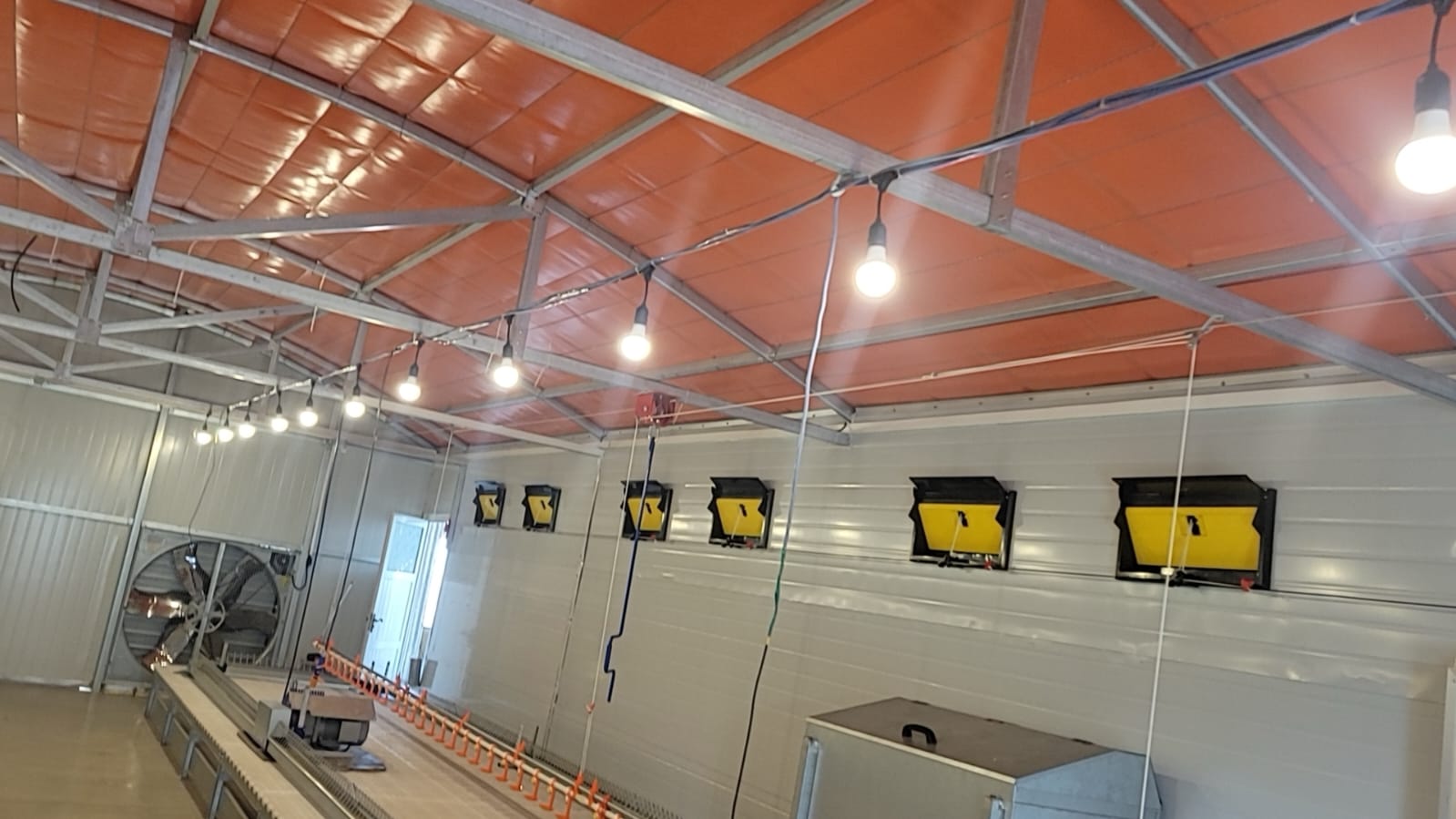
In mechanically ventilated poultry houses, extraction fans remove indoor air while air inlets provide pathways for fresh outdoor air to enter.
The positioning and adjustment of these inlets influence how incoming air moves through the building.
Poorly planned air entry can result in uneven distribution, stagnant areas or unwanted draughts.
For poultry ventilation systems, important considerations include:
- Poultry house dimensions.
- Bird age and stocking density.
- Extraction fan capacity.
- Number and positioning of air inlets.
- Required air distribution.
- Seasonal temperature and humidity conditions.
Manual and automatic air inlet systems are available for different ventilation designs. The correct choice depends on the building, management approach and ventilation requirements.
8. Manual Air Inlet Vents and Adjustable Directional Deflectors
Industrial air inlet vents are available in different designs and operating mechanisms.
Some models use automatic pressure-controlled opening systems, while others operate manually.
A manual air inlet vent allows the user to control the opening without relying on an automatic actuator or pressure-controlled mechanism.
Models featuring adjustable directional deflectors provide additional flexibility in directing incoming air.
This can be useful in ventilation arrangements where the direction of fresh-air entry needs to be adjusted according to the building layout.
For example, a wall-mounted inlet with an adjustable deflector can be incorporated into suitable factory, warehouse, workshop and agricultural ventilation systems.
The selection should consider the required airflow, opening dimensions, installation position and operating requirements.
9. How to Match Air Inlet Vents with Industrial Extraction Fans
An effective mechanical ventilation system requires coordination between air intake and extraction.
The extraction fans determine how much air is removed, while the available intake openings influence how replacement air enters the building.
When selecting equipment, consider the following:
Extraction fan capacity
Determine the required extraction airflow based on building volume, heat loads, occupancy and the nature of the activities inside.
Available intake area
Ensure the air intake openings provide sufficient free area for the required replacement airflow without excessive pressure losses.
Air distribution
Position intake openings to encourage suitable air movement through the occupied or working areas.
Building pressure
Consider the pressure relationship between the building interior and the outdoor environment.
Environmental conditions
Assess outdoor dust, rain exposure, temperature and humidity when selecting intake equipment.
The number of air inlet vents should not be selected simply by matching the number of extraction fans. A proper ventilation design must account for fan airflow, inlet free area, pressure losses and other system requirements.
For ducted ventilation projects and higher-pressure air movement applications, centrifugal blowers may also be appropriate.
10. Choosing the Right Industrial Air Inlet Vent
Before purchasing an air inlet vent, consider the following factors:
1. Material
Choose a material suitable for the installation environment. Plastic/PVC, aluminium and galvanised steel products are available for different applications.
2. Dimensions
Check the outer dimensions and required wall opening to ensure the product fits the intended installation location.
3. Opening mechanism
Determine whether a manual, automatic or motorised opening mechanism is appropriate.
4. Directional airflow
Adjustable directional deflectors can provide flexibility in controlling the direction of incoming air.
5. Environmental protection
Consider whether additional weather protection, insect screening or air filtration is required.
6. Ventilation capacity
Check the effective free area and pressure drop rather than relying on the outer dimensions alone.
11. Industrial Air Inlet Vents Available in Kenya
The Cold Room Kahuna supplies industrial ventilation equipment for factories, warehouses, workshops, commercial kitchens, agricultural buildings and other commercial applications in Kenya.
Our range includes the 600 × 300mm PVC Industrial Air Inlet Vent, featuring:
- Plastic/PVC construction.
- Manual opening mechanism.
- Adjustable directional deflector.
- Outer dimensions of 600 × 300mm.
- Specified wall opening of 545 × 260mm.
This wall-mounted fresh-air intake louver provides a designated entry point for outdoor air in compatible mechanical ventilation systems.
Explore our 600 × 300mm PVC Industrial Air Inlet Vent.
We also supply industrial ventilation fans and centrifugal blowers for suitable air extraction and movement applications.
Explore our related products and services:
- Industrial Ventilation and Extraction Systems in Kenya
- Industrial Ventilation Fans
- Industrial Centrifugal Fans and Blowers
- Commercial Kitchen Hood Systems
12. Industrial Ventilation Equipment Supply Across Kenya and East Africa
Choosing the right ventilation equipment is important for factories, warehouses, commercial kitchens, workshops and agricultural facilities.
The Cold Room Kahuna provides industrial ventilation and air movement equipment in Nairobi and across Kenya, with supply solutions for customers in Tanzania, Uganda, Rwanda and South Sudan.
Whether you are improving an existing ventilation system or planning a new project, we can assist with enquiries for suitable air inlet vents, industrial fans and centrifugal blowers.
Contact The Cold Room Kahuna
Phone / WhatsApp: +254 745 105691
Email: info@thecoldroomkahuna.com
Website: https://thecoldroomkahuna.com/
Contact us for industrial air inlet vents, ventilation equipment and fresh-air intake solutions in Kenya and East Africa.
Frequently Asked Questions
What is the purpose of a fresh-air intake vent?
A fresh-air intake vent provides a designated opening for outdoor air to enter a building. It is commonly used alongside mechanical extraction fans to provide replacement air in industrial and commercial ventilation systems.
Why do warehouses need fresh-air intake?
Warehouses may use mechanical extraction to remove accumulated heat and stale air. Fresh-air intake openings provide replacement air and help support the intended airflow through the building.
Can air inlet vents work with industrial extraction fans?
Yes. Air inlet vents can work alongside industrial extraction fans as part of a mechanical ventilation system. Their size, number and position should be selected according to the required airflow and pressure conditions.
What is the difference between manual and automatic air inlet vents?
Manual air inlet vents are operated by hand, while automatic models use mechanisms such as pressure control or actuators to regulate opening. The appropriate option depends on the ventilation design and operating requirements.
Where should industrial air inlet vents be installed?
Their position depends on the building layout, extraction fan locations, airflow requirements and intended air distribution. A ventilation assessment helps determine suitable installation positions.
Where can I buy industrial air inlet vents in Kenya?
The Cold Room Kahuna supplies industrial air inlet vents and ventilation equipment in Kenya. Contact +254 745 105691 for product enquiries, pricing and availability.